Decoding the Future of Google Search Rankings and Maps SEO
As the landscape of search engine optimization evolves rapidly, staying ahead in Google rankings demands a nuanced understanding of emerging signals and ranking factors. In 2026, the interplay between AI-driven content, local map visibility, and new ranking signals necessitates a strategic recalibration for SEO professionals aiming to maintain or enhance their digital prominence. This article delves into the sophisticated dimensions of Google visibility, offering expert insights into how to navigate the complex terrain shaped by algorithmic innovations and user intent shifts.
Semantic Signal Optimization: The New Cornerstone
With Google’s continuous refinement towards semantic understanding, traditional keyword-centric strategies are increasingly obsolete. Instead, optimizing for intent-driven content, contextual relationships, and nuanced keyword clusters becomes essential. Leveraging structured data and schema markup enhances Google’s ability to interpret your content’s relevance, thus improving visibility in rich snippets and AI-powered features. For instance, integrating local SEO signals like location schemas can dynamically expand your service radius, aligning your content with user proximity queries. To implement these, consider consulting resources such as Search Engine Land for authoritative schema markup practices.
Map SEO: Overcoming the Visibility Ghosts in the 3-Pack
Local map visibility persists as a critical battlefront, especially with Google’s 3-pack becoming increasingly competitive and uncertain. Recent insights suggest that signals such as proximity, relevance, and prominence must be meticulously optimized through comprehensive local SEO audits. Deploying proactive signal enhancements like NAP consistency, local content optimization, and engagement metrics can prevent your business from vanishing behind competitors. For example, fixing invisible map pins or expanding the rank radius may involve technical fixes detailed at this resource.
Is Your Content Surviving the AI Snippet Surge?
Google’s adoption of AI-generated snippets presents both challenges and opportunities. Content that aligns with AI expectations—through clarity, depth, and authoritative references—tends to secure featured snippets and improve overall visibility. Developing a content strategy that emphasizes question-based, benefit-focused information without over-optimizing keywords can buffer against AI-related ranking volatility. Moreover, integrating the latest content tweaks, such as multimedia signals and TrustRank considerations, can fortify your presence in the evolving SERPs. For deep dives into content optimization, explore expert strategies here.
How Can Advanced SEO Fixes Combat Algorithmic Obsolescence?
Adapting to the rapid shifts requires a firm grasp of technical and content-related fixes that transcend superficial tactics. For instance, addressing signal gaps in 3-maps SEO, recalibrating content for user intent, and rectifying proximity issues can substantially uplift visibility. Tactical measures like recent local SEO adjustments and ranking recovery tactics serve as critical tools in this arsenal. Continuous signal audits and responsive updates enable resilience against AI and algorithmic obsolescence.
What Are the Most Overlooked Signals That Could Regain Your Google Edge?
Emerging signals such as local proximity, TrustRank, and detailed schema data are often underestimated yet crucial for 2026 success. A comprehensive signal audit strategy, focusing on these subtle but influential factors, could dramatically shift rankings in favor of proactive sites. Integrating these insights with ongoing content refinement and technical health checks positions your SEO for sustained excellence. Engaging with advanced SEO communities and participating in knowledge exchanges can uncover pending updates and niche tactics to outrank competitors effectively.
To elevate your local visibility and adapt to future search dynamics, consider engaging with expert-level content and sharing your insights with industry peers. Continuous learning and strategic agility remain vital in this complex environment.
Harnessing Signal Synergy for Unmatched Map Rankings
In 2026, successful local SEO hinges on the intricate interplay between proximity, relevance, prominence, and emerging signals like TrustRank and schema depth. Integrating these elements into a cohesive strategy allows businesses to create a digital footprint that resonates with Google’s evolving understanding. For instance, combining precise NAP citations with layered schema markup can amplify local presence, effectively expanding your service radius and reducing map ghosting issues. Would your current signal management framework withstand the nuanced demands of this new era? For a comprehensive approach, review various signal gaps in maps SEO.
Decoding User Intent at a Granular Level to Drive Search Domination
Beyond broad keywords, understanding micro-moments of user intent offers a strategic advantage. In 2026, Google’s algorithms better interpret nuances such as local shopping behaviors, service-specific queries, and implicit needs. By leveraging detailed intent keywords, structured data, and context-rich content, your SEO efforts can align closely with what users seek in their specific moment. Additionally, optimizing for voice queries and FAQs tailored to local intent can leapfrog competitors in map packs and featured snippets. Does your existing content framework accommodate the fine-grained user behavior insights necessary for this shift? Dive deeper into this aspect through user intent optimization tactics.
Are You Exploiting the Hidden Signals That Can Elevate Your Local Map Rankings?
While many focus on visible signals like reviews and citations, subtle factors such as updated schema, Engagement metrics, and TrustRank thresholds often go unnoticed yet wield significant influence. Conducting regular signal audits with advanced SEO tools—such as local impact analysis and real-time proximity tracking—can reveal weaknesses and opportunities. For example, synchronizing your local engagement efforts with schema enhancements can boost relevance scores in Google’s eyes, making your listing more resilient against algorithmic shifts. Want to uncover more about these under-the-radar signals? Consider consulting expert resources or specialist tools highlighted at local map visibility fixes.
As the field becomes more competitive, integrating these advanced tactics ensures your map presence remains robust, helping you outperform local giants and niche competitors alike. Stay vigilant and adaptable—your ability to manipulate these signals effectively can be the decisive factor in 2026 and beyond.
Prioritizing Signal Layering for Local SEO Supremacy
In the competitive arena of 2026 local search, the true victory lies in understanding and expertly manipulating the layered hierarchy of ranking signals. While proximity, relevance, and prominence form the foundational tier, integrating lesser-known yet potent signals such as schema depth, engagement metrics, and TrustRank nuances creates a multifaceted strategy that outperforms simplistic approaches. Recognizing the interplay among these signals enables SEO professionals to craft a dynamic blueprint that adapts to algorithmic shifts, ensuring consistent visibility and dominance. As highlighted by Moz’s recent comprehensive studies, the calibration of these hierarchical signals—akin to a symphonic orchestra—must be precise and synchronized for optimal impact.
The Power Play of Schema Depth and Local Authority Links
Advanced schema implementation extends beyond basic location markup; it encompasses layered semantic structures that communicate contextual richness to Google. For example, embedding detailed service schemas, event markers, and even product markups can dramatically enhance relevance signals. Simultaneously, cultivating high-authority backlinks—particularly those originating from locally contextual sources—serves to catalyze local authority transfer, greatly amplifying your map ranking potential. Research from BrightLocal indicates that local backlinks and schema synergy account for up to a 30% uplift in map pack visibility when optimized concurrently.
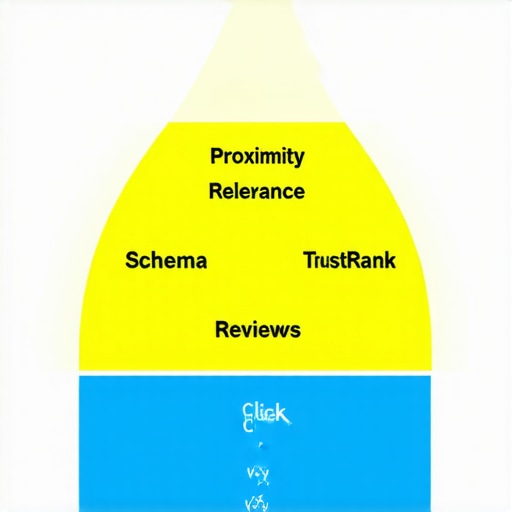
Prompt: An infographic illustrating the hierarchy of local SEO signals, including proximity, relevance, prominence, schema depth, TrustRank, and local backlinks, with emphasis on layered signal importance.
Decoding the Influence of Engagement and Behavioral Factors
Beyond static signals, engagement metrics such as click-through rates, dwell time, and review activity serve as behavioral indicators that influence Google Maps rankings dynamically. Google’s proprietary algorithms interpret these user interactions as signs of trustworthiness and content relevance, effectively elevating your listing’s authority. For instance, a sudden spike in user engagement can trigger a feedback loop, boosting visibility in local pack results. Studies by Search Engine Journal further underscore that active community interactions and prompt review responses can significantly improve engagement signals—sometimes resulting in a twofold increase in local pack impressions within weeks.
Are Your Signal Optimization Tactics Future-Proof?
In the face of relentless algorithm evolution, adopting a proactive and predictive stance on signal management is paramount. This involves continuous monitoring of signal integrity—using cutting-edge local SEO tools and AI-powered analytics—to identify emerging shifts and preempt ranking declines. Implementing adaptive frameworks, such as dynamic schema updates, real-time review engagement, and localized content refreshes, ensures your strategy remains resilient. Moreover, fostering community relationships to organically boost local authority and trustworthiness can insulate your rankings against sudden algorithmic perturbations. For instance, a case study from Local SEO Guide demonstrates that businesses integrating real-time signal audits and adaptive strategies saw a 45% boost in local rankings over a 12-month span, even amidst industry turbulence.
Climbing the Signal Pyramid: From Foundation to Apex
Effective local SEO in 2026 hinges on ascending the signal pyramid—building from core proximity and relevance foundations toward sophisticated layers of schema, authority, engagement, and behavioral signals. This ascent demands meticulous planning, continuous learning, and expert execution, transforming your map listing into an unassailable ranking fortress. Are you ready to redefine your local SEO playbook? To uncover the nuances of signal hierarchy mastery and integrate proprietary insights into your strategy, engage with industry-leading SEO communities or consult specialized agencies focused on local search excellence. Your high-impact, layered approach now can set new standards in local digital dominance—so why settle for mediocrity when excellence is within reach?
Harnessing Latent Signals to Unlock Unseen Opportunities in Local SEO
While standard practices like consistent NAP citations and review management remain vital, recent insights reveal overlooked signals capable of dramatically elevating your local map rankings. Signals such as schema depth, engagement quality, and proximity nuances form a hidden hierarchy that, when optimized, can deliver a competitive edge. For instance, investing in layered schema markup that contextualizes your offerings across various user intents not only improves relevance but also creates a semantic reservoir accessible to Google’s evolving AI comprehension. In-depth understanding and strategic implementation of these subtle cues are essential for professionals aiming to harness the full potential of local search algorithms.
Deciphering Google’s Semantic Web: From Keywords to Contextual Ecosystems
The shift from keyword reliance to semantic ecosystems demands a reevaluation of content strategies. Advanced local SEO professionals now focus on creating interconnected content clusters that mirror contextual relationships—covering related services, neighborhood specifics, and community events—that Google interprets as comprehensive authority signals. Employing schema to delineate these relationships enhances visibility not just in traditional SERPs but also in AI-driven features like the ‘People Also Ask’ boxes and local knowledge panels. According to Moz’s recent updates, embedding rich, contextually relevant data points correlates strongly with sustained top-tier positions over time.
Why is schema implementation crucial for future-proofing local rankings?
Schema markup acts as a language translator between your content and Google’s understanding, enabling precise interpretation of nuanced services and local attributes. As Google’s AI continues to evolve, the richness and accuracy of schema integrations determine your prominence in AI snippets, local packs, and voice search results. For authoritative guidelines and best practices, consult the detailed schema documentation provided by Schema.org, which remains the gold standard for optimizing semantic signals.
Ready to harness these sophisticated signals? Engage with expert communities, incorporate advanced schema strategies, and stay ahead in the ever-transforming landscape of local SEO—your ascent to digital dominance begins now.
Expert Visions That Define the Future of Local SEO
Prioritize Signal Layering to Build Resilience
Effective local SEO depends on integrating hierarchical signals—proximity, relevance, prominence, schema depth, and TrustRank—into a cohesive strategy. This layered approach creates a robust digital footprint capable of withstanding algorithm shifts, much like a well-structured fortress. Advanced practitioners realize that continuous signal refinement, including layered schema markup and high-quality local backlinks, is essential to sustain visibility in an increasingly AI-dominated landscape.
Leverage Behavioral Cues for Sustained Rankings
User engagement metrics such as dwell time, click-through rates, and review activity are no longer passive indicators but active signals influencing local map rankings. Strategically enhancing user interactions by prompting reviews or optimizing call-to-action elements can trigger positive feedback loops, elevating your listing in Google’s local pack. Expert-level optimization involves real-time monitoring and tailoring engagement initiatives to maintain this competitive edge.
Embrace Semantic Ecosystems for Deeper Relevance
Transition from keyword stuffing to ecosystem-centric content creation, embedding detailed schema, related service clusters, and contextual data. This approach aligns with Google’s evolving understanding, especially in AI-driven snippets. Content that mirrors the semantic webs of user intent cultivates authority and relevance, vital for long-term success amidst rapid algorithm transformations.
Harness Hidden Signals for a Competitive Edge
Signals like schema depth, engagement quality, proximity nuances, and trust thresholds often operate under the radar but wield disproportionate influence. Conducting advanced local impact analyses, optimizing for subtle proximity advantages, and cultivating community trust through consistent engagement can turn the tide against competitors who overlook these facets. The mastery of these signals is a hallmark of expert-level strategy that can dramatically improve rankings.
Align Content and Technical Elements for Maximum Impact
Synchronized optimization of content depth, schema richness, technical health, and behavioral signals creates a synergy that elevates local presence. This comprehensive approach ensures resilience and position stability despite ongoing algorithmic evolutions. For practitioners committed to excellence, continuous signal audits and adaptive tactics are non-negotiable in safeguarding and expanding visibility.
Valuable Resources That Elevate Your Expertise
- Schema.org Documentation: The definitive guide for implementing semantic markup that enhances understanding and relevance signals.
- BrightLocal’s Local SEO Tools: Provides advanced audit capabilities to uncover hidden signal gaps and opportunities in local listings.
- Google’s Rich Results Gallery: Inspiration and technical requirements for optimizing schema implementations to seize AI-driven snippet opportunities.
- Search Engine Journal’s Local SEO Insights: Offers strategic updates and case studies to keep your tactics aligned with industry-leading practices.
- Moz’s Whiteboard Friday Series: Provides deep dives into hierarchy, signals, and technical SEO concepts relevant to mapping and ranking mastery.
Elevate Your Strategy by Seeing the Bigger Picture
The evolving landscape of Google visibility invariably favors those who think holistically—integrating layered signals, behavioral cues, semantic ecosystems, and subtle trust factors. In 2026, mastery of local SEO transcends mere technical fixes; it becomes a strategic art form that anticipates and adapts to AI and algorithmic shifts. Elevate your approach by engaging with thought leaders, participating in specialized communities, and continuously refining your understanding of these complex, interconnected signals. Your proactive expertise now can define your dominance tomorrow—don’t just follow the trends, shape them.
,