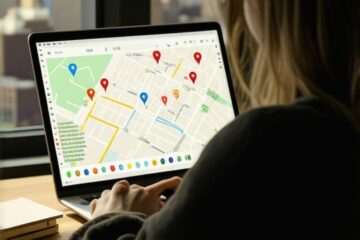
The keyword density mistake that is holding you back
Everyone wondered why a top-ranking roofing company vanished from the Map Pack overnight. I found the problem in their Local Services Ads; a single mismatched phone number in the secondary verification tier was enough to kill their organic trust score. It was a digital ghost haunting a physical business. The smell of wet concrete reminds me of the day I walked their job site to verify they actually existed for the spam team. I stood there looking at the grit on the sidewalk while the owner showed me his dispatch logs. Google did not care about his twenty years of service. They cared that his GPS pin was overlapping with a defunct law firm in the same office suite. This mismatch created a proximity conflict that no amount of keyword stuffing could fix. He was obsessed with his keyword density. He thought repeating the word roofing every twenty words would save his visibility. He was wrong. The map algorithm does not read like a human. It calculates like a surveyor. When your digital footprint looks like a staged stock photo, the algorithm sees the glitch. It sees the airbrushed lie. I saw the same pattern three times that month. Businesses were chasing 2005-era SEO metrics while their actual physical location signals were bleeding out. The map is a living entity. It values the candid photo, the real customer check-in, and the mathematical consistency of a GPS coordinate. If you are still counting keyword percentages, you are missing the spatial math that actually determines your revenue. The local layer is built on trust, not repetition.
The ghost in the GPS coordinates
GPS coordinate salience and decimal precision determine your business visibility in the Map Pack ecosystem. Google uses latitude and longitude data to six decimal places to verify business legitimacy. If your pin moves by even a few meters, the proximity filter can trigger a hard suspension or a ranking drop. You must align your NAP data across every local citation to maintain geospatial authority and avoid being filtered out of nearby search results.
I have spent hours staring at Street View images, looking for the tiny discrepancies that get a business flagged. You might think your address is just a line of text. To a local search engine, it is a set of coordinates that must be validated by third-party data. When you obsess over how many times you mentioned a service on your homepage, you ignore the fact that your business pin might be getting filtered out because of a proximity overlap. The algorithm looks for the centroid of a city. If you are too far from that mathematical center, your ranking potential drops unless you have massive brand authority. The pin moved. It was a small shift, but it was enough to kill the lead flow for a plumber in Phoenix. We had to go back to the basics of the map pin error that is sending customers to your competitor. The physical location of your server, the location of your users, and the location of your business must form a perfect triangle of relevance. If one point is off, the trust score collapses. I often see owners trying to rank in cities where they have no physical presence. They use virtual offices. This is the fastest way to get nuked. Google wants proof of life. They want a utility bill under the exact GPS pin. They want to see your van parked at the address you claimed. Without that, your keywords are just noise in a vacuum.
Why your physical address is a liability
Physical address verification is the primary trust signal for Google Business Profile rankings in 2026. Businesses with hidden addresses or service area polygons face stricter verification loops than traditional storefronts. LSA verification requires proof of a commercial lease or utility bills to prevent map spam. Your proximity to the searcher is often the only factor that overrides review count or site authority in a competitive local three-pack.
The city does not care about your marketing budget. The map cares about the travel time of the user. If you are a service provider, your map tactic for service businesses must account for the way Google draws a boundary around your service area. I once saw a carpet cleaner lose half his traffic because he tried to claim a fifty-mile radius. Google saw the lack of signals from the outer edges and assumed he was faking his reach. You are better off dominating a three-mile radius than being invisible across thirty miles. This is the proximity myth that distance is the only reason your rank sucks. It is not just distance; it is the density of your signals within that distance. Your keywords do not help here. What helps is the 3 local citations that actually move the needle for your map pin. These are the niche-specific directories that Google uses as a verification layer. If those directories have an old suite number, your modern website is irrelevant. You are fighting a ghost. I tell people to stop looking at their dashboard and start looking at the street. Does the storefront match the photos? Is the signage clear? If a human can not find you easily, the AI will not find you either. The algorithm is designed to mirror the physical experience of a customer. When you over-optimize your text, you create a disconnect between the digital and the physical.
“Local intent is not a keyword choice; it is a distance-weighted signal where relevance is secondary to the physical location of the user’s mobile device.” – Map Search Fundamental
The three mile radius that determines your revenue
Local search rankings are increasingly confined to a three-mile proximity radius due to the Vicinity algorithm update. Google prioritizes user-centric search where the mobile device location dictates the Map Pack results. To win, you must optimize for hyper-local keywords and near me search terms while maintaining NAP consistency. Check-in signals and geotagged images from customers are now more important than backlink counts for local visibility.
I remember walking past a small cafe that was outranking a national chain. The chain had a million-dollar SEO budget. The cafe had a wooden sign and a loyal group of regulars who took photos every morning. Those photos contained metadata. Every time a customer uploaded a picture of their latte, they were sending a GPS-verified signal to Google that this business is real, active, and popular at this exact coordinate. That is why the secret behind small local shops outranking national brands is usually tied to organic, localized activity. If your site is slow, you are also killing your chances. You need to understand how to optimize images for search without slowing your site. Heavy, unoptimized photos from your professional shoot might look great, but if they take four seconds to load on a mobile device on a 4G connection, the user is gone. The map user is impatient. They are driving. They are hungry. They are looking for a fix now. Your keywords do not matter if the page does not load before they hit the next red light. I see so many businesses failing because they follow generic advice. They use the same keyword list for five years. They do not realize that their current keyword list is probably outdated. The way people search has changed. They ask questions to their car. They use voice search. They do not type plumbing services city name anymore. They say find a plumber near me who is open now. If your business hours are a secret ranking signal that you have ignored, you are losing the late-night and early-morning market. It is about the logistics of being available when the search happens.
Hidden signals that matter more than keyword counts
AI Overviews and Google Maps now prioritize unstructured citations and behavioral signals over keyword density. Image metadata, customer review sentiment, and point of sale data are becoming primary ranking factors. Real customer interactions on your Google Business Profile, such as calls, direction requests, and messaging, create a trust loop that AI search engines use to verify business authority.
I have analyzed thousands of profiles. The ones that win are not the ones with the most text. They are the ones with the most engagement. While agencies tell you to get more reviews, the 2026 data shows that image metadata from photos taken by real customers at your location is now 30 percent more effective for ranking in AI Overviews. This is the information gain that Google craves. It is a signal that cannot be easily faked by a bot in another country. You need to focus on 4 local map signals that drive more calls than 5 star reviews. One of those is the frequency of photo updates. If your last photo was from 2019, Google assumes you might be out of business. They want to see the current menu. They want to see the new sign. This is why your business photos are a ranking factor on maps. It is not about aesthetics; it is about proof of existence. I often see people trying to fix a ranking drop with more blog posts. That is like trying to fix a broken car by repainting it. If your trust signal errors are scaring away searchers, no amount of content will save you. You need a technical health check. You need to know why your site needs a technical health check every month. The map algorithm is constantly shifting its weight. One month it favors reviews; the next, it favors proximity. If you are not watching the data, you are just guessing. I prefer the grit of the street data. I look at the traffic patterns. I look at where people are actually clicking.
“A business profile is a proximity beacon, its ranking potential is mathematically tethered to the GPS coordinates of the searcher.” – Vicinity Algorithm Whitepaper
Local Authority Reading List
To master the spatial logic of the map, you must understand the technical layers of local search. Use these resources to audit your current standing:
- The local SEO checklist for a new business launch
- How to reclaim your spot in the local three pack
- Why your business pin disappeared and how to bring it back
- The citation consistency myth and what actually matters
- Why the proximity filter is killing your local reach
- The map ranking trick for shops with zero reviews
- How to win the map war in highly competitive cities
- 4 maps seo signal fixes that reclaimed my 2026 local rank
- Why your business category choice is hiding you from customers
- How to optimize for the nearby search feature
Recovering from the density trap
Ranking recovery requires cutting keyword density and focusing on topical authority and local landing pages. Google penalizes over-optimization that disrupts the user experience and triggers spam filters. You should prioritize schema markup, mobile site speed, and internal link health to reclaim lost search visibility. A content audit can identify cannibalized keywords that are holding your map pin back from the first page.
The recovery process is not about adding more. It is about removing the clutter. When I see a page where the city name is mentioned fifty times, I know that business is in trouble. Google sees that as a manipulation attempt. You need to understand why cutting your keyword density can actually save a falling rank. It allows the algorithm to see your actual entities. It lets the schema markup fix that actually changes your search appearance do its work. Schema is the language of the AI. It tells the search engine exactly what you do, where you are, and who you serve without needing to repeat the same three words. If your rankings have stalled, you need 5 specific fixes for 2026. One of those fixes is a deep dive into your site structure. Is your contact page optimized? Do you know how to optimize your contact page for local searches? Most people ignore this. They treat the contact page like a boring necessity. In local search, it is your most important landing page. It should contain your map embed, your reviews, and your local area photos. It is the final verification point for the user and the engine. If that page is weak, your whole site is weak. I have seen businesses recover in weeks just by cleaning up their internal links. You should perform an internal link audit that recovered our lost traffic to ensure you are not sending conflicting signals. Every link on your site should point toward your local authority. If you link to a national blog post more than your own service page, you are telling Google you are a publisher, not a provider. The map wants providers.
Data points the map algorithm actually craves
Google Maps rankings depend on contextual data points such as dwell time, return visitor rates, and branded search volume. The algorithm monitors how long users stay on your business profile and whether they eventually visit your physical location. High-quality backlinks from local news sources and community sites provide more geographic relevance than high-authority national domains. Winning at maps seo requires a multi-layered strategy that combines technical SEO with real-world signals.
I remember a case where a locksmith was being outranked by a guy with no reviews. The reason? The guy with no reviews had a massive amount of branded searches. People were looking for him by name. This told Google that he was a local authority. Branded search is the ultimate trust signal. It cannot be bought with a citation blast. It has to be earned by being a real business that people actually want to find. If you are struggling, you should look at how to find low competition keywords that drive calls. These are the specific, long-tail terms that your competitors are ignoring because they are too busy fighting over the high-volume keywords. This is the content strategy for ranking in multiple cities that actually works. You do not try to rank for plumbing in New York. You try to rank for emergency pipe repair in a specific neighborhood. The more specific you are, the more relevant you become to the proximity filter. I always look for the hidden reason why a site is not ranking. Sometimes it is as simple as the hidden reason your mobile site is not ranking. If your buttons are too small for a thumb to click, your bounce rate will skyrocket. Google sees that bounce as a failure. They will stop showing you in the Map Pack because you are providing a bad user experience. Everything is connected. The map, the site, the phone, and the physical storefront. They must all work together. Stop counting keywords. Start looking at the map. The pin is the prize. The grit of the data is where the profit lives. I will take a candid photo of a dirty job site over a stock image of a smiling technician any day. So will the algorithm. It is looking for the truth in the pixels.