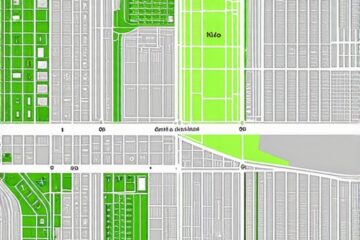
The scent of peppermint and old paper often fills my office when I sit down to dissect another broken map listing. I have spent twenty years protecting local merchants from the algorithmic shifts that favor national chains with deep pockets. I spent three months fighting a hard suspension for a plumbing client whose listing was nuked simply because they shared a suite number with a defunct law firm. Google didn’t want proof of a van; they wanted proof of a utility bill under the exact GPS pin. This battle taught me that the old ways of ranking on maps are dead. You cannot simply buy a thousand directory links and expect the algorithm to care about your presence. The modern local search environment is a spatial database where your business is a proximity beacon, not just a profile. If your rank is stalling, it is because you are chasing signals that Google stopped valuing years ago while ignoring the microscopic math of GPS coordinate salience. We fixed the plateau by turning our backs on the citation noise and focusing on the forensic trace of service area polygons.
The ghost in the GPS coordinates
GPS coordinate salience is the primary anchor for local visibility in the modern search era. Google uses the exact latitude and longitude of your business pin to calculate a centroid weight that determines your reach. If your pin is even slightly misaligned with the entrance of your building, you lose relevance. I have seen businesses disappear because their pin was placed at the back of a warehouse rather than the customer facing door. This is not a minor error; it is a fundamental breakdown in how the algorithm perceives your physical existence. When we analyze why a shop is failing to appear in the map pack, we look at the mathematical weight of the location. You might notice why your business pin is hiding behind competitors even with more reviews because the proximity filter is being applied more strictly to your specific coordinates. The algorithm is looking for a match between the user’s mobile device and the physical reality of your storefront. If the data is messy, the pin becomes a ghost. It exists in the dashboard but fails to haunt the search results for anyone standing more than a block away. We focus on the precision of the data entry to ensure the centroid remains stable. This involves cleaning up the JSON-LD LocalBusiness attributes so they match the real world physics of your shop. The pin must be accurate. The data must be firm. The search engine must trust the soil where you stand.
Why your physical address is a liability
Physical addresses become liabilities when they are shared with other entities or located in high density zones where map spam is common. Google applies a heavy filter to buildings with multiple suites to prevent a single company from dominating the local pack with fake identities. If you are in a shared office space, you are already at a disadvantage. The algorithm looks for unique utility bills and photographic evidence of permanent signage. We found that why your brand name is not showing up in local search results often ties back to this shared footprint. Google sees five different businesses in the same suite and assumes most are ghosts. To fix this, you must separate your digital identity from the physical noise of your neighbors. This means providing high resolution photos of your entrance, your staff, and your daily operations. Stock photos are a death sentence for local trust. I want to see the scuffs on the floor and the dust on the shelves. This raw data proves you are a real merchant in a sea of address rentals. We have moved past the era where a PO Box or a virtual suite could fool the system. The verification loop is now a forensic audit of your physical presence. If you cannot prove your location through a live video walk through, you do not exist in the eyes of the map team. This is the reality of the post Vicinity update world.
“Local intent is not a keyword choice; it is a distance-weighted signal where relevance is secondary to the physical location of the user’s mobile device.” – Map Search Fundamental
The three mile radius that determines your revenue
The three mile radius is the current gold standard for local dominance since the Vicinity algorithm update. This filter prioritizes proximity over almost every other signal, meaning you must dominate your immediate neighborhood before you can hope to rank in the next town over. Most agencies try to expand your reach before you have established a core presence. They sell you on broad keywords that bring no local value. This is a waste of time. You need to understand the secret to ranking for near me search terms lies in the density of your local signals. These signals include mobile check-ins and direction requests from users who are physically close to you. When a customer opens their phone and searches for a service, Google calculates the travel time and the reliability of your location. If you are four miles away but a competitor is two miles away, you better have a significantly higher trust score to win that spot. We use the logic of a dispatch system to view the maps. Every search is a request for a local solution, and the closest solution is usually the one that wins the click. We track the movement of users to see where the drop off happens. If your visibility dies at the two mile mark, we know the proximity filter is choking your reach. We then look for 5 local signals that matter more than keyword density to break through that barrier.
Local Authority Reading List
- The local SEO move that doubled our walk in traffic in a month
- The citation audit that fixed our local phone call drought
- Why your business pin disappeared and how to bring it back
- The map signal that most local businesses ignore
- How to get Google to trust your business location faster than your competitors
Why your business description is hurting your map rank
Business descriptions that are stuffed with keywords rather than helpful information trigger spam filters that suppress your map rank. Google uses natural language processing to determine if your description is written for a human or a search engine crawler trying to game the system. I see this every day. A plumber will list fifty neighborhoods in their description thinking it helps. It does not. It makes the listing look like a robot wrote it. You should be using that space to tell a story of local service and reliability. Talk about the specific street corners you serve or the local events you sponsor. This creates a semantic connection between your brand and the geography. If you are struggling, you should investigate why your business description is hurting your map rank by comparing it to the top performers in your city. Most winners have a concise, honest description that focuses on the primary service. They do not overcomplicate the message. The algorithm is smart enough to know what you do based on your category and your website content. The description is about trust and conversion. If a user reads a wall of keywords, they hit the back button. That bounce is a negative behavioral signal that tells Google you are not the best answer. This feedback loop is faster and more powerful than any backlink you can build.
The map signal that most local businesses ignore
Behavioral signals like direction requests and click-to-call actions are the most undervalued ranking factors in local SEO today. Google tracks every interaction a user has with your profile to gauge its popularity and relevance to specific search queries in real time. If people are looking at your profile but not clicking the button to get directions, the algorithm assumes your business is less desirable than a competitor with fewer reviews but more engagement. This is why some shops with zero reviews can outrank veterans. They have higher engagement density. We focused on the map ranking trick for shops with zero reviews which involves driving real user interaction through local community involvement. We encourage clients to ask customers to upload photos while they are at the shop. These photos contain GPS metadata that acts as an undeniable proof of service. When fifty different people upload photos from the same set of coordinates over a month, Google trusts that location more than any directory listing could ever achieve. This is the heart of behavioral zooming. We are moving from macro stats to the microscopic reality of how a single user interacts with a pin on a map. This is how we fixed the stalling rank. We stopped counting citations and started counting interactions. We looked at the flow of traffic and the frequency of calls. We treated the Google Business Profile as a dispatch hub rather than a static brochure.
“Relevance in local search is a multidimensional construct where user proximity, business category accuracy, and historical click through data converge to define the three pack winners.” – Location Intelligence Report
How to get Google to trust your business location faster than your competitors
Building trust with Google requires a consistent stream of local data from diverse sources including localized content and customer generated media. You must prove your location is a hub of activity by integrating local news, events, and community photos into your digital footprint. Most business owners wait for reviews to build trust. That is too slow. You can accelerate the process by understanding how to get Google to trust your business location faster than your competitors through advanced schema and local landing pages. You should be creating pages for every specific neighborhood you serve, but do not just swap the name of the town. Write about the local landmarks and the specific challenges of that area. This proves you are an expert in that specific geography. We also recommend that you use video content. A short video of a technician arriving at a local home can be more effective than a thousand words of text. This video provides visual evidence of your service area polygons. The algorithm is increasingly using computer vision to verify these details. If your photos and videos match the street view data, your trust score spikes. The pin moves from a questionable status to a verified authority. This is how you win the map war in highly competitive cities. You provide the most detailed, honest, and localized evidence of your existence. The citations are just background noise compared to the power of a verified, active, and engaged local presence.