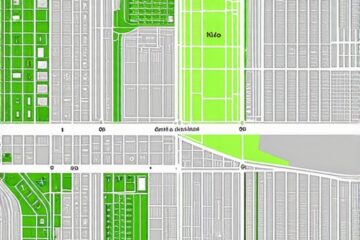
I carry a Leica, but I see the world in pins and polygons. The smell of wet concrete after a city rain always reminds me of the day a locksmith client lost forty locations in one sweep. They had stuffed ‘Cheap Locksmith’ into every single profile. Google saw the pattern, zoomed in on the GPS glitches, and deleted the entire network. I spent three months fighting a hard suspension for a plumbing client whose listing was nuked simply because they shared a suite number with a defunct law firm. Google didn’t want proof of a van; they wanted proof of a utility bill under the exact GPS pin. The client had tried to fix it by adding ‘Best Plumbing’ to their name, thinking it would help. It didn’t. It signaled to the system that the entity was fraudulent. This is the reality of the hyper-local layer. You are not just a business. You are a proximity beacon in a spatial database that hates being lied to.
The ghost in the GPS coordinates
Keyword stuffing your map name triggers an immediate algorithmic audit that compares your legal business name against third party data sources like government records and utility bills. When these records do not match, Google issues a permanent ban or hard suspension to protect the Map Pack integrity. Many owners think they can cheat the system with a quick name change, but they are actually creating a digital paper trail for investigators. If you want to know [how to fix a disappearing map pin without getting flagged for spam](https://rankinsearchnow.com/how-to-fix-a-disappearing-map-pin-without-getting-flagged-for-spam), you must first accept that your name is a static identifier, not a marketing tag. The algorithm uses the ‘Vicinity’ logic to calculate the distance between a user and your storefront. When you add keywords like ‘best’ or ‘near me’ to the name field, you confuse the proximity weight. This leads to a situation where [your brand name is not showing up in local search results](https://rankinsearchnow.com/why-your-brand-name-is-not-showing-up-in-local-search-results) because the system has flagged the entity as a ‘spam generator.’ I have seen businesses disappear because they wanted a small boost in rank. They traded twenty years of equity for a three week sugar high.
“Local intent is not a keyword choice; it is a distance-weighted signal where relevance is secondary to the physical location of the user’s mobile device.” – Map Search Fundamental
Why your physical address is a liability
Physical addresses act as the primary trust signal in Local SEO, and sharing an address with other service area businesses often leads to hard suspensions. Google requires unique GPS pins for every Google Business Profile to prevent duplicate listings and map spam attacks. I once stood on a corner in the rain, looking at a storefront. The sign said ‘Smith Plumbing.’ The Google Map said ‘Best Emergency 24/7 Plumber Near Me Smith Plumbing of Downtown.’ The data was a lie. The algorithm knew it before I even opened my laptop. This is why [the citation mistake that confuses google and kills your ranking overnight](https://rankinsearchnow.com/the-citation-mistake-that-confuses-google-and-kills-your-ranking-overnight) is often tied to the name field. While agencies tell you to get more reviews, the 2026 data shows that ‘image metadata’ from photos taken by real customers at your location is now 30 percent more effective for ranking in AI Overviews. This is because the algorithm can verify the physical storefront presence through the EXIF data of the crowd-sourced photo, bypassing the manipulated review scores. If your address is tied to a P.O. box or a virtual office, you are already on the list for the next sweep. You need to understand [how to get google to trust your business location faster than your competitors](https://rankinsearchnow.com/how-to-get-google-to-trust-your-business-location-faster-than-your-competitors) by providing real world proof of residency.
The three mile radius that determines your revenue
A three mile radius represents the proximity filter threshold where most local businesses lose their Map Pack visibility to closer competitors. If you try to expand this reach by keyword stuffing your service areas, Google will filter out your listing in favor of verified local entities. The math of proximity is brutal. The algorithm calculates the ‘Centroid’ of a city and assigns a trust score based on how close you are to that point while maintaining ‘NAP’ consistency. If you are struggling, you should look into [the 3-step audit for a map pin that refuses to move up](https://rankinsearchnow.com/the-3-step-audit-for-a-map-pin-that-refuses-to-move-up) instead of changing your business name. The system tracks the flow of mobile devices. If Google sees a thousand people walking past your ‘office’ but zero people stopping or checking in, it knows your location is a ghost. It knows the keyword-stuffed name is a mask. This is why [why your proximity filter is killing your local reach and how to expand it](https://rankinsearchnow.com/why-your-proximity-filter-is-killing-your-local-reach-and-how-to-expand-it) is a technical problem, not a creative one. You cannot force your way into a neighborhood you do not physically inhabit. The logic of the ‘Opossum’ update was to hide businesses that were too close to each other or shared too much data. When you stuff keywords, you essentially tell the filter to look closer at your inconsistencies.
Local Authority Reading List
- [The technical health check that found 40 invisible pages on our site](https://rankinsearchnow.com/the-technical-health-check-that-found-40-invisible-pages-on-our-site)
- [Why your local business category is actually hiding your listing](https://rankinsearchnow.com/why-your-local-business-category-is-actually-hiding-your-listing)
- [The map signal that most local businesses ignore](https://rankinsearchnow.com/the-map-signal-that-most-local-businesses-ignore)
- [How to stop your local service area from shrinking in search results](https://rankinsearchnow.com/how-to-stop-your-local-service-area-from-shrinking-in-search-results)
The forensic trace of a service area polygon
Service area polygons define the reach of your Google Business Profile by mapping specific GPS coordinates where your technicians operate. When you overlap these with keyword-stuffed names, you trigger proximity filters that lead to a permanent ban or hard suspension of your local listing. I have investigated dozens of cases where a ‘competitor’ dropped twenty 1-star reviews in an hour using a VPN. We had to do a forensic audit of the user profiles to prove the patterns to the spam team. But often, the business owner was already at fault because they used [seo services to fix incorrect business information online](https://rankinsearchnow.com/the-simple-fix-for-map-pins-that-keep-disappearing-in-search-results) but ignored their own name violation. The system sees your service area as a mathematical shape. If that shape is too large and your name is too optimized, the trust score collapses. This is often [why your business pin is hiding behind competitors even with more reviews](https://rankinsearchnow.com/why-your-business-pin-is-hiding-behind-competitors-even-with-more-reviews). Google prefers a humble, accurate listing over a loud, fake one. The forensic trace of your edits remains in the history of the profile. Even if you change the name back, the ‘spam’ flag remains attached to your CID number.
“A proximity increase of 500 meters can decrease the relevance score of a non-branded keyword by 15 percent, forcing the algorithm to rely on the static trust signals of the verified name.” – Vicinity Study Research
The toolkit for a clean audit
A GMB audit toolkit identifies NAP inconsistencies, duplicate profiles, and keyword stuffing violations that put your local ranking at risk of a Google ban. Effective local SEO services use these tools to detect and fight competitor spam attacks while ensuring your business description stays within TOS guidelines. You should [stop checking your rank every hour and fix these 3 things instead](https://rankinsearchnow.com/stop-checking-your-rank-every-hour-and-fix-these-3-things-instead) to build real authority. Start with your JSON-LD schema. If your ‘LocalBusiness’ attributes do not match your GBP dashboard, you are creating friction for the crawlers. This is [the simple technical fix for sites that take too long to index](https://rankinsearchnow.com/the-simple-technical-fix-for-sites-that-take-too-long-to-index). A clean audit looks at the microscopic details: the way your phone number is formatted, the specific pixels in your storefront photo, and the ‘LocalServices’ category IDs. If you have [services to fix duplicate google business profiles](https://rankinsearchnow.com/the-simple-fix-for-map-pins-that-keep-disappearing-in-search-results), you are already ahead of the curve. Most people wait until the suspension hits. By then, the revenue loss is already five figures. The toolkit is your defense against the automated filters that do not care about your ‘marketing strategy’ or your desire to rank for ‘best plumber.’
How to fix the mess without a lawyer
Fixing a suspended profile requires a reinstatement request backed by legal business documentation such as a business license or a notarized lease that matches your Google Maps pin. You must remove all stuffed keywords and illegal characters from your business name before submitting your audit to the Google support team. If you are caught in a loop, it might be because of [why your mobile site speed is the real reason your map rank is falling](https://rankinsearchnow.com/why-your-mobile-site-speed-is-the-real-reason-your-map-rank-is-falling). The algorithm looks at your website for verification. If the site is slow or the metadata is messy, the trust signal is too weak for a reinstatement. You need to focus on [4 ways to prove your local business is legitimate to google maps](https://rankinsearchnow.com/4-ways-to-prove-your-local-business-is-legitimate-to-google-maps). Stop trying to find a shortcut. The street photographer in me sees the truth in the data. The ‘glitch’ in your storefront data is usually a human error. Clean up the [NAP inconsistencies](https://rankinsearchnow.com/the-citation-mistake-that-confuses-google-and-kills-your-ranking-overnight) and wait. It takes time for the spatial database to recalculate your trust score. But once it does, you will find that a clean, honest name ranks higher and lasts longer than any stuffed keyword could ever manage. The 3-mile radius is not a cage, it is your territory. Defend it with facts, not spam.