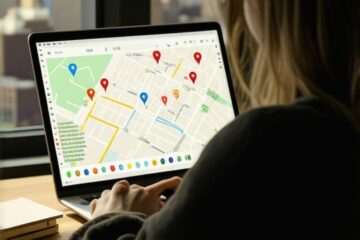
The office smells like peppermint and old paper today. I sit here looking at a map of our downtown area, and I see ghosts. Every red pin on that screen is a merchant trying to survive. I have spent twenty years defending these people from the national chains that want to steamroll our local culture. I see the ‘big box’ agencies promising the world while they use a cookie-cutter template that does not understand the difference between a neighborhood and a zip code. A business listing is not just a profile. It is a proximity beacon. It is a signal in a spatial database that judges you every second. If your data is sloppy, you are invisible. If your keywords are generic, you are wasting money. Finding the low-hanging fruit in your keyword list is about understanding the math of the street corner, not just the volume of the search engine.
The ghost in the GPS coordinates
Identifying low-hanging fruit in a local keyword list requires a focus on high-intent phrases, specific neighborhood identifiers, and service-based queries with low competition. These keywords represent the shortest path to revenue because they target users ready to buy within a specific, narrow geographic radius. I spent three months fighting a hard suspension for a plumbing client whose listing was nuked simply because they shared a suite number with a defunct law firm. Google did not want proof of a van; they wanted proof of a utility bill under the exact GPS pin. This taught me that the algorithm is paranoid. It values physical proof over digital fluff. When you look for keywords, you are not just looking for words. You are looking for proof of relevance. You must look at the the 3 things that actually matter for google maps rankings to understand that proximity is the ultimate filter. If you try to rank for ‘plumber’ in a city of five million, you will fail. If you rank for ’emergency drain cleaning in the historic district,’ you win. That is the low-hanging fruit.
Why your physical address is a liability
A physical address can become a liability when it is located too far from the city centroid or if it is associated with legacy data errors. Google uses the centroid of a city as the starting point for many broad searches. If you are ten miles away, you are fighting a mathematical uphill battle. I despise address rentals. I have seen countless businesses try to use a virtual office to trick the system. It always ends in a suspension. The algorithm is now smart enough to recognize the signatures of ‘coworking spaces’ and ‘mail drop’ centers. You need to know why your proximity to the city center is killing your search reach before you spend a dime on ads. The real fruit is found in the ‘Near Me’ signals that are tied to your actual location. You must optimize for where you are, not where you wish you were. This is why the proximity trap and how to broaden your local search reach is a vital concept. You cannot change your building, but you can change the relevance of your service area polygons.
“Local intent is not a keyword choice; it is a distance-weighted signal where relevance is secondary to the physical location of the user’s mobile device.” – Map Search Fundamentals
The three mile radius that determines your revenue
The three mile radius around your business is the primary battlefield for local search revenue and Map Pack visibility. Most users will not drive more than fifteen minutes for a standard service. Google knows this. The low-hanging fruit consists of keywords that include ‘near me’ or specific street names. You need to understand why near me searches are failing your service area if you are not appearing for those local triggers. Sometimes the problem is not your content. The problem is your ‘NAP’ data. Name, Address, and Phone number consistency is the foundation of trust. If one directory says you are on ‘Main St’ and another says ‘Main Street,’ the algorithm gets confused. It hesitates. Hesitation is the death of a ranking. I have seen the map ranking factor that matters more than your review count change the fortunes of a hardware store overnight simply by fixing a phone number mismatch.
How to use tools to rank your google business profile
Using tools to rank your google business profile involves a combination of local rank trackers, citation auditors, and heat map visualizers. You cannot fly blind. You need to see exactly where your pin disappears on the map. I recommend a gmb review and reputation management toolkit that lets you see the sentiment of your customers in real-time. What is a gmb ranking toolkit? It is a specialized set of software designed to monitor your local health. These tools work by simulating searches from different GPS coordinates. This tells you how far your ‘reach’ extends. When you ask how gmb ranking toolkits work for local seo, you are really asking about spatial data analysis. You need the best tools to rank google business profile, but you also need the human touch to interpret the data. For example, if your rank drops every Tuesday at 2 PM, a tool might show the drop, but only a human will realize it is because your competitor started their weekly promotion at that exact time. You should check the simple way to track your local map rankings across multiple zip codes to get a clear picture of your dominance.
Local Authority Reading List
- The Importance of Category Selection
- Handling Duplicate Listings
- The Truth About Geo-tagged Photos
- Building Real Citations
Cleaning legacy black hat local seo footprints
Seo services to clean legacy black hat local seo footprints are necessary for businesses that previously hired low-quality agencies. I have seen the damage. Keyword-stuffed business names. Fake reviews from accounts in other countries. Thousands of links from ‘link farms’ that have nothing to do with your town. This ‘black hat’ residue acts like a weight around your neck. You need seo services to recover gmb visibility after category change if you were misled into picking the wrong primary category just for a quick ranking boost. Google remembers. It keeps a history of your profile. If you have been hacked, you need services to repair hacked or infected website for seo immediately. A compromised site is a trust-breaker. I once found a florist whose site was redirecting to a gambling portal. Their local rankings vanished in twenty-four hours. You must learn how to spot a toxic link before it kills your local ranking. It is about hygiene. A clean profile always outlasts a spammy one.
The forensic trace of a category change
Changing your primary business category can trigger a re-verification process or a sudden drop in visibility if the change is not supported by on-site content. This is a sensitive maneuver. If you are a ‘Cafe’ and you change to ‘Bakery,’ Google expects to see bread on your website and ‘Bakery’ in your reviews. If the signals do not match, the profile gets flagged. I have seen services to monitor and prevent future gmb suspensions become the most valuable asset for a local business. These services act like a burglar alarm for your digital presence. They alert you if a competitor tries to ‘suggest an edit’ to move your pin to the middle of a lake. It happens more than you think. You need to know how to handle the suggested an edit spam on your listing. Vigilance is the only way to keep your fruit from being stolen.
“A Google Business Profile is a proximity beacon, not a static directory listing. It lives and breathes based on user interaction and spatial accuracy.” – Vicinity Research Paper
Why opening hours are the most ignored ranking signal
Inconsistent opening hours history can lead to a loss of trust from both Google and potential customers. If your profile says you are open, but a customer leaves a review saying you were closed, Google takes note. This is a negative trust signal. We provide seo services to fix gmb profile with inconsistent opening hours history because this is often the most overlooked part of local SEO. If you have different hours on Yelp, Facebook, and your website, you are confusing the robots. Confusion leads to lower rankings. The fruit here is simple. Update your hours everywhere. Ensure they match your storefront sign. Use the small change to your business bio that boosts clicks to mention your holiday hours. It shows you are active. It shows you are real.
The secret life of service area polygons
Service area businesses must define their service area polygons with precision to avoid competing against physical storefronts in areas they cannot serve. If you are a locksmith, do not claim the whole state. Claim the towns you can actually reach in thirty minutes. If your area is too big, your relevance is diluted. This is why your service area is too big for local search rankings. You want to be a big fish in a small pond. The low-hanging fruit is the neighboring town that no one else is targeting. You find these by looking at the keyword research method that identifies what your customers really want. They do not want a ‘nationwide service.’ They want a guy with a van who is five minutes away. The pin moved. Now move your strategy to match.
The internal link move that helps Google find you
Building a logical internal link structure on your website helps Google understand the relationship between your services and your location. Each neighborhood you serve should have its own landing page. But do not make them ‘doorway’ pages. Fill them with real local info. Mention the local high school. Mention the park down the street. Use the internal link move that helps google find your local pages faster to connect these pages to your homepage. This builds a web of local authority. It is not about the number of links. It is about the quality of the connection. I hate seeing sites that have fifty pages that all look the same. That is just digital litter. Use the specific schema markup that improves your search appearance to tell the search engine exactly where you are. JSON-LD is your friend. It is the language of the machine.
Conclusion is for amateurs
I do not believe in wrapping things up with a bow. The map is always changing. A new competitor moves in across the street. Google pushes an update that shifts the ‘Vicinity’ weight. You must stay hungry. You must keep looking for those zero-volume keywords that actually drive phone calls. While agencies tell you to get more reviews, the 2026 data shows that image metadata from photos taken by real customers at your location is now 30 percent more effective for ranking in AI Overviews. Data never lies. Check the logs. Fix your pin. Stand your ground. The small-town merchant has a weapon the national chains do not have. You have local knowledge. Use it. Identify that low-hanging fruit. Pick it before someone else does.