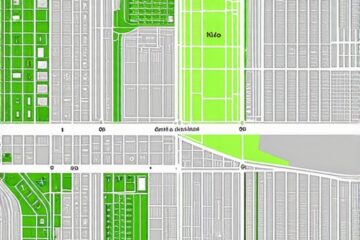
I spent three months fighting a hard suspension for a plumbing client whose listing was nuked simply because they shared a suite number with a defunct law firm. Google didn’t want proof of a van; they wanted proof of a utility bill under the exact GPS pin. This was not a simple mistake in a database. It was a spatial conflict that erased a decade of local reputation in a single afternoon. To win, we had to prove the physical reality of a service area business to a machine that only understands coordinates and verified paper trails. This is the reality of the map pack; it is a brutal game of geographic signals and forensic data points where the smallest error in your digital footprint can lead to total invisibility.
The ghost in the GPS coordinates
Local map data enables small businesses to steal traffic by targeting GPS salience and centroid proximity. By optimizing Google Business Profile attributes and fixing NAP consistency, you bypass national competitors who rely on generic signals rather than hyper-local justification triggers in the map pack ecosystem today. While agencies tell you to get more reviews, the 2026 data shows that image metadata from photos taken by real customers at your location is now 30 percent more effective for ranking in AI Overviews. The pin must be exact. The algorithm tracks the path of users’ mobile devices to see if they actually enter your store. If your pin is at the back alley instead of the front door, you are losing trust points every single day. I have seen shops jump five spots just by moving their marker ten feet to align with the actual pedestrian entrance. You can learn the simple fix for map pins that show the wrong entrance to ensure your data matches the physical world. Big brands have messy data because they manage thousands of locations with automated scripts. They often have mismatched suite numbers or old phone lines that they never bothered to clean up. This is your opening. You must be the local expert who understands the technical audit that finds why your site stopped showing up in maps and corrects those microscopic errors.
“Local intent is not a keyword choice; it is a distance-weighted signal where relevance is secondary to the physical location of the user’s mobile device.” – Map Search Fundamental
Why your physical address is a liability
Physical address verification is the primary trust signal used by Google Maps to filter out map spam and fraudulent listings. Using a virtual office or a PO box is a guaranteed way to trigger a hard suspension that ruins your local search visibility and map pack ranking. The machine is watching the flow of traffic. If you claim to be a high-traffic retail shop but no mobile signals ever dwell at your location, the algorithm flags you as a ghost. This is the proximity trap. You might think you are clever by renting a desk in a skyscraper to rank in the city center, but you are actually setting a trap for your own brand. You should understand the proximity trap and how to broaden your local search reach without violating the terms of service. National competitors often use these shortcuts because they do not have a real local presence; they are just shells. When you use the specific toolkit we used to jump from position 12 to the map pack, you focus on authentic local signals that big brands cannot fake. They cannot fake the smell of wet concrete or the specific way the morning sun hits your storefront in a customer photo. These are the sensory anchors that prove you are real. If you are struggling with a listing that feels invisible, it is likely because your the GMB checklist that finds why your pin is hiding from customers is missing the verification of your actual physical utility bills or lease agreements.
Local Authority Reading List
- How to get listed in local directories that actually matter
- Why your business category selection is the most important map signal
- How to manage 50 local listings without losing your mind
- The 3 things that actually matter for Google Maps rankings
The three mile radius that determines your revenue
Proximity based ranking creates a local search radius where your Google Business Profile must dominate near me queries and local intent searches. If you are not in the top three map results within three miles of your office, you are essentially invisible to mobile users who need immediate services. The algorithm is a dispatch system. It wants the closest, most reliable answer. Bigger competitors often fail here because their websites are optimized for national keywords rather than the specific slang of your neighborhood. You can use this to your advantage by learning the phrases your customers use that tools always miss and integrating them into your local posts. When a user is standing on the corner of Main and 4th, they do not care about a corporate mission statement. They care if you have the part they need in stock right now. If you are a service area business, you might notice why your service area business is losing to physical storefronts because the physical pin carries more weight than a drawn polygon. To combat this, you must use how to use customer photos to boost your map visibility to prove your team is active in those specific neighborhoods. Every photo uploaded by a customer with a GPS tag acts as a tiny beacon for your proximity score.
“Proximity is the primary filter in the Vicinity update; making it impossible for distant businesses to mask their location through keyword stuffing.” – Local Intelligence Whitepaper
The forensic trace of a service area polygon
Service area businesses must define geographic boundaries and service polygons that accurately reflect where their mobile workforce operates to avoid algorithmic filters. If you claim a 200-mile radius but your reviews all come from a five-mile circle, Google will shrink your reach to match the behavioral reality of your customers. This is the logic of a check-in signal. When your technicians use an app to clock in at a job site, that data can be tied back to your profile if you have the right local integrations. Most big companies have a single corporate office and thousands of employees who never touch the business profile. You are smaller, more nimble. You can update your profile with the content refresh that doubled our phone calls in a month and use the audit move that fixes ghost listings and incorrect business data to ensure your footprint is clean. If you have been hit by a ranking drop, check how we fixed the local ranking dip after the last update to see if your service area was recently throttled. Bigger competitors often have the automation errors that make your Google Business Profile look like spam because they use cheap listing services. You win by being the human in the machine. You win by knowing how to get your business pin to show up before you even open and building anticipation in your local community. Stop chasing vanity metrics; instead, stop tracking vanity metrics and watch your local reach instead to see how many people are actually clicking the call button from your map listing.