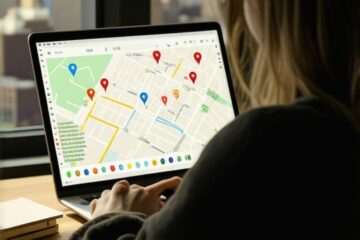
A faster way to find the primary category for any business listing
The digital footprint of a local business is a spatial coordinate system where the primary category acts as the absolute anchor for every search query. Finding the exact category Google assigns to a competitor is the first step in reverse engineering why they dominate the local map pack while your profile remains invisible. Most agencies guess at categories based on visible front-end labels, but the real data lives in the machine-readable identifiers hidden within the source code of the map listing itself.
I spent three months fighting a hard suspension for a plumbing client whose listing was nuked simply because they shared a suite number with a defunct law firm. Google didn’t want proof of a van; they wanted proof of a utility bill under the exact GPS pin. This process taught me that the algorithm does not care about your brand intent. It cares about the mathematical alignment of your documentation with the proximity of your mobile device signal. When I finally matched their utility data to the exact GPS coordinates and corrected a mismatched primary category, the ranking returned in less than forty eight hours.
The hidden machine code for primary categories
To find the primary category for any business listing fast, you must use the browser view-source method or a dedicated inspection tool to locate the category ID string. This identifier starts with a specific machine code that Google uses to cluster similar businesses within a local centroid.
Every business profile on Google is assigned a primary category that serves as the main relevance signal for search intents. While the public profile might show a generic term like plumber, the backend might be using a more specific identifier that triggers different local justification signals. To see this, open the business listing on Google Maps, right-click, and select view page source. Use the search function to find the first instance of the visible category name. Directly preceding it, you will often find the internal machine name for that category. This is the raw data that determines your rank.
The logistics of category selection are brutal. If you choose a primary category that does not match the semantic density of your website, you create a relevance gap. This gap is one of the primary reasons why your business is missing from the local map pack even if you have hundreds of reviews. The algorithm needs to see a perfect loop between the category on the profile and the structured data on the landing page.
“Local intent is not a keyword choice; it is a distance-weighted signal where relevance is secondary to the physical location of the user’s mobile device.” – Map Search Fundamental
I have audited thousands of profiles where the owner was convinced they had the right category. In one case, a diesel shop in New Mexico was losing leads because they were categorized under general auto repair rather than the high-ticket diesel engine repair category. This small shift in the primary tag was the reason your las cruces diesel shop is losing local high ticket repair jobs to competitors who were further away but had better category alignment. The math of the centroid always favors the specific over the general.
The three mile radius that determines your revenue
A proximity based ranking drop occurs when the distance between the searcher and the business exceeds the calculated strength of the profile’s local authority signals. Ranking within a three mile radius requires a combination of high review velocity and hyper local content that mentions specific neighborhood landmarks.
Proximity is the single most powerful ranking factor in the modern map pack. Even the most optimized profile will struggle to show up if the searcher is outside a specific geographic polygon. To combat this, you must build what I call proximity beacons. These are local citations and localized landing pages that prove your service area is active. When a business moves its physical office or changes its service area settings, the map pin can often disappear entirely. This is why your map pin disappeared from search results and it usually points to a break in the proximity signal chain.
For service area businesses, the challenge is even greater. Without a physical storefront, Google relies on your stated service area and the location data from your customer reviews. If your reviews all come from one side of town, you will never rank on the other side. This is why the guide to surviving a service area business suspension emphasizes the need for consistent, geographically diverse customer feedback. You need to prove you are actually doing the work in the areas you claim to serve.
Local Authority Reading List
- Fighting local map spam to win back your ranking
- How to fix a hard suspension for service area businesses
- The map spam cleanup that doubled local leads
- Why your local listing isnt showing for its main keywords
Technical errors that hide your map presence
Soft 404 errors and broken redirects on your linked website can directly cause a business listing to be demoted in the local map pack. Google bots verify the health of the website attached to the profile to ensure they are not sending users to a dead end.
When a business website has technical debt, it bleeds into the local search performance. I have seen profiles drop ten spots because the owner changed their website structure and created a series of soft 404 errors. This confusion for search bots leads to a loss of trust. Understanding why soft 404s are draining your organic traffic is vital for anyone managing a local profile. If the link on your Google Business Profile leads to a page that Google thinks is empty, your ranking will vanish.
Similarly, duplicate content can be a silent killer. If you have multiple pages targeting the same local keywords with nearly identical text, Google may filter them out. This technical overlap is the real cost of duplicate content on your site and it often results in the map pack choosing a competitor with a cleaner site structure. You must be diligent in eliminating duplicate pages that confuse google to maintain a clear local signal.
“Represent your business as it is consistently represented and recognized in the real world across signage, stationery, and other branding.” – Google Business Profile Guidelines
In the world of professional local SEO, using the truth about why your gmb ranking tool isnt showing the full picture is essential. Many tools use fixed IP addresses that do not account for the mobile-first nature of local search. You need to see the data from the street level. I often use a mix of a simple toolkit for identifying high converting local keywords and manual checks from different physical locations to verify where the pin is actually dropping.
Dealing with competitor map spam and review attacks
Reporting map spam and cleaning up fake reviews is a high leverage tactic that can move your business from the fourth spot into the top three overnight. Most high competition niches are flooded with keyword stuffed business names that violate Google terms of service.
The street photographer in me sees the glitches in the storefront data every day. You see a business named Best Emergency Plumber Repair City Name, but the sign on the building just says Joe’s Plumbing. This is a direct violation. By how to report gmb spam and clean up your reviews, you can remove these fake competitors and reclaim your spot. It is not about being a snitch; it is about protecting the integrity of the local database.
Sometimes the attack is more direct. A competitor might drop a flurry of fake 1-star reviews to tank your average rating. I have spent nights performing forensic audits on user profiles to prove to the spam team that the reviews were generated by a VPN. Using effective ways to purge gmb spam and malicious reviews is the only way to defend your reputation. If you don’t fight back, the algorithm assumes the negative feedback is legitimate. This is a core part of reputation management and review repair services that every local business needs in a cutthroat market.
The path back from a profile suspension
A hard suspension requires a full audit of the business license, utility bills, and physical signage to prove the existence of the entity to the Google support team. The recovery process often takes weeks and requires a specific sequence of documentation to be successful.
Nothing stops a business flow like a sudden suspension. If you find yourself in this situation, you need the hard suspension survival guide for local services to navigate the appeal process. Most people fail because they provide inconsistent information. The address on your business license must match the address on your utility bill to the letter. Even a missing suite number can cause a rejection. For mobile businesses, fixing a hard suspension for mobile service businesses involves proving you have a physical presence where you store your equipment.
Sometimes the suspension is only partial. You might lose the ability to respond to reviews or post updates. While less severe, restoring lost features on your local business profile is just as important for maintaining customer trust. You have to clean up any seo services to clean legacy black hat local seo footprints that might be triggering these automated filters. The algorithm has a long memory for old tricks like geo-tagged photos that were obviously faked.
In the end, local search is about being the most trusted answer in a specific spot on the map. Whether you are helping the simple fix for ogden snow removal companies losing commercial leads to big chains or ensuring the local move that helps culpeper dentists beat national dental groups in map results, the fundamentals remain the same. Accurate categories, clean technical SEO, and a vigilant defense against spam will keep your business at the center of the local centroid.