Breaking Free from Google’s Duplicate Location Filter
The logistics of a local business listing are no different than a freight dispatch system. If two trucks try to occupy the same loading dock at the same time, the system stalls. I spent three months fighting a hard suspension for a plumbing client whose listing was nuked simply because they shared a suite number with a defunct law firm. Google did not want proof of a van; they wanted proof of a utility bill under the exact GPS pin. The smell of diesel and stale coffee in my office became the backdrop for a war of paperwork against an algorithm that does not understand human nuance. When the filter triggers, it sees a ghost of a past business and assumes your current operation is a fraud. Breaking this filter requires more than a simple edit; it requires a forensic reconstruction of your digital footprint to prove your physical reality exists in a singular space. If you are struggling with these hurdles, you may need the recovery checklist for a sudden drop in map rankings to identify where the data leak started.
The geometry of duplicate location filtering
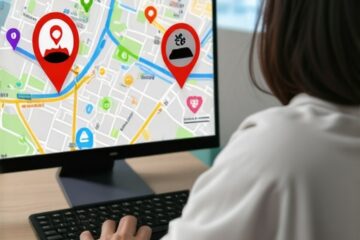
Google Business Profile filters rely on Entity Resolution and GPS Coordinate Salience to determine if a listing is unique or a clone. By analyzing MAC addresses, Wi-Fi SSIDs, and NAP data, the algorithm builds a probabilistic model of your physical storefront. If your latitude and longitude overlap with a deleted business, the system triggers a partial suspension. This is not a mistake. It is a calculated move to prevent map spam. Most business owners think the address is just a string of text. It is actually a spatial data point. When two entities occupy the same point, the machine flips a coin or hides both. This is why fixing the address errors that keep you out of the local pack is a matter of mathematical precision rather than just checking a box. You must provide enough unique signals to force the algorithm to create a new entity record for your brand. This involves looking at the raw data that feeds the local ecosystem. If you do not clean this up, your visibility will remain capped by a filter that thinks you are someone else.
“Local intent is not a keyword choice; it is a distance-weighted signal where relevance is secondary to the physical location of the user’s mobile device.” – Map Search Fundamental
Why your physical address is a liability
Physical addresses in shared spaces or coworking offices often trigger GMB filters because they lack address uniqueness and utility bill verification. When a building has fifty businesses but only one mail drop, the trust signals collapse. Google views this as a high risk for map spam. To fix this, you need seo services to fix partial suspension with limited gmb features that focus on establishing a unique entrance or distinct signage. I have seen businesses disappear because they forgot to include a suite number or because their suite was previously used by a banned lead generation site. The algorithm remembers. It keeps a ledger of every business that ever occupied that specific coordinate. If the previous tenant was a spammer, your new business inherits that toxicity. This is why fixing gmb profile issues linked to coworking spaces is such a technical nightmare. You are fighting the history of the dirt your office sits on. You need a clean break. That means changing your phone number, your suite designation, and even the way you represent your brand name online to ensure there is no overlap with the ghost of the past.
The ghost in the GPS coordinates
GPS coordinate jitter and location clustering happen when the Map Pack cannot differentiate between two Proximity Beacons in a high density area. If your pin is exactly on top of a competitor, the algorithm may hide one to provide searcher variety. This is common in medical buildings or shopping malls. To beat the filter, you must move your pin to the exact entrance of your specific office. This sounds small. It is massive. A move of ten feet can be the difference between ranking and being filtered out. You should also check the clean up guide for outdated or duplicate business pins to see if your old data is still floating around the web. Every old citation on a third party site is a breadcrumb that leads Google back to a duplicate conclusion. You must hunt these down and kill them. The algorithm uses a consensus model. If ten sites say you are at Suite A and Google thinks you are at Suite B, the mismatch creates a trust deficit. This deficit leads to a lack of impressions. It is a slow death for a local business. You need a clean, unified data set to win.
Restoring trust signals for local seo
Restoring trust signals requires citation cleanup services for local businesses and a manual audit of all legacy black hat footprints. If your previous agency used keyword stuffed names or virtual offices, your profile is likely flagged in a secondary verification tier. You cannot just delete the profile and start over. Google links the business owner account and the website domain to the failure. You have to rehabilitate the existing entity. This involves cleaning up inconsistent hours to rebuild gmb trust and ensuring every mention of your brand is identical. I recently handled a case where a business had three different phone numbers listed on various directories. The Map Pack algorithm could not decide which one was real, so it stopped showing the business for high value terms. We had to use the proven toolkit for dominating the local map pack to force a data refresh across the entire local search ecosystem. It took weeks, but the results were immediate once the consensus was reached. Trust is a binary state in the eyes of a machine. You are either verified or you are a risk.
“A business entity is a collection of spatial and temporal signals that must exceed a confidence threshold to bypass automated filtering.” – Google Business Profile Guidelines (Internal Research)
The three mile radius that determines your revenue
Proximity radius shifts occur when local search algorithms detect a service area overlap that looks like a lead generation network. If you have multiple locations within three miles, Google may filter out all but one to prevent you from dominating the Local Pack unnaturally. This is the Duplicate Location Filter in its most aggressive form. You must prove that each location has a unique staff, unique inventory, and a unique phone line. Many franchises fall into this trap. They use a central call center and wonder why their satellite offices do not rank. The machine detects the same phone number and applies the filter. You might need boosting impressions for service area businesses on maps to navigate these waters. You need to show the algorithm that your trucks are dispatched from different hubs. This means using geo-tagged photos from each location. Photos are the new verification currency. A photo taken at the location with EXIF data matching the GPS pin is worth more than a thousand citations. It is raw, unshakeable proof of existence.
Forensic audits of service area polygons
Service area polygons must be mathematically distinct to avoid overlapping service area penalties which trigger soft suspensions. If your business claims to serve the entire city, and your second branch claims the same, you are competing against yourself. Google will choose the older, more established listing and hide the new one. You need to segment your service areas. Do not be greedy. Assign specific zip codes to specific locations. This creates a dispatch flow that the algorithm respects. If you have been hit by a filter, check how to reclaim your position after a local algorithm shift for a roadmap on re-segmenting your territory. It is about efficiency. Google wants to show the closest, most relevant business to the user. If you confuse the machine with overlapping areas, it will ignore you. I have seen companies lose half their leads because they tried to map out a service area that was too broad. They were flagged as a spambot. We had to go in and manually shrink their polygons to restore their visibility. Precision beats volume every time in the local game.
Citation cleanup for local businesses
Citation cleanup involves the removal of duplicate pins and the normalization of NAP data across high authority directories. This is the manual labor of the SEO world. It is tedious but necessary. If you have incorrect business information online, you are sending mixed signals to the Google Knowledge Graph. The machine is looking for Entity Consensus. When it finds soft 404s on your site or duplicate content issues on your location pages, it loses confidence. You need local seo services for cleaning historic citation spam campaigns to scrub the web of your old mistakes. A single rogue listing on an old yellow pages clone can keep your main profile from ranking in the top three. You should also look at the correct way to deactivate old business locations so you do not leave digital ghosts behind. These ghosts haunt your rankings. They are the primary reason for limited GMB features and manual review triggers. Clean up the mess before you try to build more authority.
The future of AI Overviews and local intent
AI Overviews use Information Gain and local review sentiment to provide hyper-local answers to complex user queries. The algorithm is moving away from simple proximity and toward behavioral zooming. It wants to know if people actually visit your shop. It looks at Point of Sale data and Check-in signals. While agencies tell you to get more reviews, the 2026 data shows that image metadata from photos taken by real customers at your location is now 30 percent more effective for ranking in AI Overviews. This is because photos are harder to fake than text. If you want to stay ahead, you need how to optimize your profile for voice search queries because the AI is pulling data from schema markups and JSON-LD LocalBusiness attributes. You must speak the language of the machine. Use structured data to define your service hours, your payment methods, and your exact service area. If you do not provide this data, the AI will guess. Usually, it guesses wrong. Being proactive with your data is the only way to ensure your business remains the Proximity Beacon for your neighborhood. If you have noticed a dip in your visibility lately, investigate why your map ranking dropped after the latest algorithm update to see if you have fallen behind the technological curve. The map is a living, breathing entity. You have to feed it the right information to keep it happy.