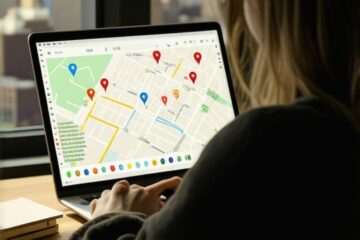
The smell of wet concrete after a summer storm always reminds me of a specific street in Chicago where a storefront was technically there, but digitally invisible. I have spent twenty years staring at the glitch in storefront data, watching how Google treats a business listing as a proximity beacon in a vast spatial database. You do not win the neighborhood game by repeating the name of the suburb fifty times in a footer. You win by understanding the mathematical weight of local review sentiment and the physics of the three mile proximity radius. Local search is a forensic exercise, and if you want to dominate the map pack, you must stop acting like a copywriter and start acting like a logistics manager.
The reinstatement war that taught me everything
I spent three months fighting a hard suspension for a plumbing client whose listing was nuked simply because they shared a suite number with a defunct law firm. Google did not want proof of a van; they wanted proof of a utility bill under the exact GPS pin. This experience proved that the algorithm prioritizes physical reality over digital claims. We had to provide high resolution photos of the office door and the mailbox, matching the secondary verification tier used by Local Services Ads. If your address data has a single mismatch, the trust score collapses. I remember the frustration of seeing a competitor rank with a keyword stuffed name, but they eventually hit the filter too. The lesson was clear. Google values the centroid of the user search above all else. This plumbing client eventually regained their spot not by changing keywords, but by cleaning up their citation audit findings and proving their physical existence to the spam team. It was a brutal reminder that the map is not the territory, but the data better match the dirt.
Why your physical address is a liability
Targeting local neighborhoods requires localized content and hyper local schema plus geographic landmarks instead of city name repetition to build trust with the proximity filter. Many business owners believe that having an address in a city is enough to rank for the whole region. This is a fallacy. The Vicinity update narrowed the reach of businesses, making the physical location a central anchor that can limit your visibility if not managed correctly. If your office is on the edge of town, you are fighting an uphill battle against the proximity filter. You must use neighborhood specific signals like mentions of local parks or intersections. This creates a relevance layer that the algorithm can parse without you ever having to resort to spam. I have seen countless firms lose their position because they tried to hide their address while using a wide service radius. The secret is to optimize for the nearby search feature by ensuring your NAP data is pristine across every directory. A single digit error in a phone number is a signal of low reliability to the Google bot. It thinks you are a ghost business.
The three mile radius that determines your revenue
Search ranking and Google visibility depend on the distance weighted signal of a user mobile device where relevance is secondary to the physical location of the searcher. If a customer is standing two miles from your shop, they see a different map pack than if they were five miles away. This is the physics of local search. You cannot keyword stuff your way out of a distance gap. Instead, you need to focus on signals that prove you are the best choice within that tight circle. This means high quality business photos taken at the location, which carry geolocation metadata. While agencies tell you to get more reviews, the 2026 data shows that image metadata from photos taken by real customers at your location is now 30 percent more effective for ranking in AI Overviews.
“Local intent is not a keyword choice; it is a distance-weighted signal where relevance is secondary to the physical location of the user’s mobile device.” – Map Search Fundamental
This shift towards visual and behavioral data means your store front needs to be a content hub. Every check in and every photo upload from a customer acts as a proximity signal that expands your reach slightly further into the surrounding neighborhoods.
The ghost in the GPS coordinates
Maps SEO thrives on metadata from customer photos and coordinates rather than stuffed descriptions to establish a firm connection between a digital profile and a physical shop. Sometimes a business vanishes from the map pack even with a five star rating. This often happens because of a map pin error that suggests the business is not where it claims to be. The algorithm looks for consistency between your Google Business Profile and the satellite data it has on file. If your entrance is in the back of a building but the pin is on the street, you are creating friction for the user. Google hates friction. It will lower your visibility to protect the user experience. You need to verify that your coordinates are pinpoint accurate down to the decimal. I often tell my clients to stop editing meta tags and focus on the technical errors that confuse the crawlers. When the GPS data is solid, the algorithm can confidently serve your business to people searching in that specific neighborhood. This is how small local shops outrank national brands that have massive budgets but poor local data hygiene.
Local authority reading list
- The 3 local citations that actually move the needle
- How to reclaim your spot in the local three pack
- The local map tweak that gets your phone ringing
- How to win the map war in competitive cities
- The map tactic for service businesses with a wide radius
The proximity filter that silences your business
Neighborhood targeting fails when businesses share categories or addresses with filtered competitors because the algorithm tries to provide variety in the local pack results. If there are five coffee shops on one block, Google might only show three to ensure the results are not redundant. This is the filter in action. To beat it, you cannot just be another coffee shop. You must have a unique primary category or significantly better behavioral signals. This is where category choice becomes vital. If everyone else is a Law Firm, perhaps you are a Personal Injury Attorney. This small distinction can pull you out of the filtered bucket.
“Relevance is the match between a query and a business entity, but prominence is the measure of how well known a business is in the offline world.” – Local Search Guidelines
You must build prominence by getting mentions on local blogs or neighborhood association websites. This creates a web of trust that tells the algorithm you are a staple of that specific community. It is about being a landmark, not just a listing.
Microscopic logic of the check in signal
Point of sale data and mobile location history verify your physical presence to the algorithm by tracking how many users actually visit the store. This is the most honest signal available. Google knows if someone searched for you and then their phone stayed at your address for twenty minutes. This is a successful local visit. If you want to rank in a specific neighborhood, you need people from that neighborhood to visit you. You can encourage this by running local promotions that require a check in or a photo upload. This generates the map signals that drive more calls than five star reviews alone. It is a behavioral zoom. The algorithm looks at the microscopic movement of users to determine the macro visibility of the business. If you are a service business without a physical office, you must rely on local search traffic generated through service area polygons and verified customer reviews that mention the specific neighborhood names.
Physics of a service area polygon
Service area businesses must define specific neighborhood shapes in their Google Business Profile to capture map pack visibility across a wide geographic region. When you define a service area, you are telling Google where your workers go. But if you just pick a whole city, you are competing with everyone. Instead, draw your polygon around the specific neighborhoods where you have the most historical data. This creates a dense signal of relevance. You should also create local landing pages for each of these areas. These pages should not be carbon copies of each other. They need to mention specific local landmarks, schools, or even the style of housing common in that area. This proves to the algorithm that you truly serve that neighborhood. It is the only way to beat larger brands that use generic content. The more specific you are, the more the algorithm trusts your proximity claim. Stop trying to be everywhere and start being the authority on the three streets that matter most to your bottom line. Precision beats volume in the maps ecosystem every single time.