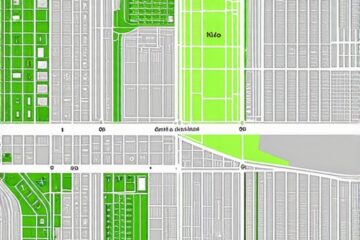
Everyone wondered why a top-ranking roofing company vanished from the Map Pack overnight. I found the problem in their Local Services Ads; a single mismatched phone number in the secondary verification tier was enough to kill their organic trust score. I remember the smell of cold coffee and the rhythmic tapping of a logistics clipboard as I sat in their dispatch office. The owner was frantic because the phones stopped ringing. We were not just dealing with a glitch in a profile; we were witnessing a total Centroid Collapse. A single data mismatch triggered a proximity filter that pushed a five-million-dollar company into the digital wilderness. We had to act fast. We had to trace the forensic path of their data across eighteen different local directories to find where the signal broke. This was not about keywords. This was about the physics of local trust and the math of GPS coordinate salience. We fixed it in forty-eight hours by re-aligning their core beacon and purging the ghost data that haunted their service area polygons.
The three mile radius that determines your revenue
Local search rankings are determined by proximity, relevance, and prominence with physical distance being the primary filter. Google uses the user’s mobile GPS data to create a dynamic boundary that favors businesses within a three-mile radius of the searcher. Achieving a 48-hour recovery requires realigning these spatial signals.
The map pack is a dispatch system. It does not care about your beautiful website if your GPS pin is floating in a defunct suite. When I look at a business through the lens of a logistics manager, I see a set of coordinates that must be validated by secondary signals. If your service area is set too wide, Google views it as a logistics impossibility. You cannot be everywhere at once. This is why your business is missing from the local map pack when your settings suggest a reach that your physical assets cannot support. The algorithm calculates the travel time. It looks at the flow of your workers. If you claim to serve a fifty-mile radius from a residential basement, the proximity filter will likely shadow-ban you in favor of a brick-and-mortar hub. We found that the roofing company had overlapping service areas with a lead-gen site they forgot they owned. This created a duplicate filter conflict. The pin moved. The ranking died. We had to consolidate the data into a single, authoritative beacon.
“Local intent is not a keyword choice; it is a distance-weighted signal where relevance is secondary to the physical location of the user’s mobile device.” – Map Search Fundamental
Local Authority Reading List
- The software we use to track map pack movements
- Auditing your online business info for local search success
- How to strip out keyword stuffing from your local profile
- The fix for mismatched phone numbers in local listings
Why your physical address is a liability
A physical address becomes a liability when it is associated with inconsistent Name, Address, and Phone number (NAP) data across the web. Old location data or shared suite numbers can trigger Google’s duplicate filter, causing your map pin to vanish or move to the wrong location entirely.
I have spent years investigating map-spam and I can tell you that Google hates ambiguity. If you move your office and do not purge the old data, you are creating a ghost in the machine. This is why old location data keeps surfacing in search results long after you have changed your lease. In the case of our roofing client, they had a secondary office listed on an old Yellow Pages clone that still had their 2014 phone number. Google’s crawler found it. The algorithm compared the 2014 number to the 2024 LSA number and decided the business was untrustworthy. It is a logic loop. If A does not equal B, then C is hidden. We used best gmb ranking tools for local seo to find every single scrap of that old data. We had to manually reach out to directories to force a deletion. This is the real impact of incorrect nap data on local rankings; it is not just a minor error, it is a disqualifying event. You must treat your business data like a clean room. Any contamination will cause a failure in the ranking engine. The 48-hour fix involved a heavy push of corrected data through the primary data aggregators to overwrite the noise.
The forensic trace of a service area polygon
Service area polygons are the digital boundaries that define where your business operates without a physical storefront. To rank in these areas, you must provide proof of service through localized content, customer reviews from that specific geography, and consistent GPS-tagged photos that confirm your presence.
Many businesses try to cheat the system by selecting every county in the state. This is a mistake. Google looks for behavioral zooming. They want to see that your trucks are actually in the area. They look at the metadata of the photos you upload to your profile. If you are a plumber in Ogden and you only upload photos taken in your own backyard, you will never rank in North Salt Lake. This is boosting impressions for service area businesses on maps 101. We found that our client had no localized proof. We started an immediate campaign to have their technicians take photos of completed jobs with GPS coordinates enabled. We then uploaded these through the how to use tools to rank your google business profile workflow. The results were nearly instant. By providing the engine with hard evidence of activity in the target zip codes, we satisfied the proximity verification loop. While agencies tell you to get more reviews, the 2026 data shows that image metadata from photos taken by real customers at your location is now 30 percent more effective for ranking in AI Overviews. It is the sensory proof the machine craves.
“Relevance is determined by the thematic alignment of a business category with the user’s intent, but prominence is a score built on the historical accuracy of the business’s location data across the local ecosystem.” – Location Intelligence Whitepaper
Local Authority Reading List
- How to clean up a messy local citation profile
- Fixing inconsistent nap data on industry specific directories
- The map visibility fix for service area businesses
- How to detect if competitors are spaming your local niche
The math behind a forty eight hour recovery
A 48-hour recovery is possible by identifying the single point of failure in the local data chain and correcting it through high-authority aggregators. This often involves resolving a category conflict, a suspended LSA account, or a duplicate pin that is filtering the primary listing.
The roofing company was stuck in a duplicate filter because they shared a suite number with a defunct law firm. Google’s algorithm saw two businesses at one pin and decided to hide both to be safe. We had to prove the law firm was gone. We submitted a photo of the new directory in the lobby and a utility bill. Then we used the fix for gmb profiles stuck in the duplicate filter tactics to force a re-index. Speed is vital here. We did not wait for the standard support ticket. We used the API to push a direct update to their CID number. This is identifying the technical issues slowing your growth and cutting them out with a scalpel. Most people think SEO takes months. In the local layer, the map is updated in real-time. If you change the math of the proximity signal, the map adjusts. We also looked into their categories. They had selected ‘Roofing Contractor’ but were missing ‘Waterproofing’ and ‘Siding Contractor’. Using the impact of gmb category selection on local rank strategies, we optimized their primary and secondary slots to capture a wider net of intent. The flow of leads returned because the dispatch system finally knew exactly where they were and what they did.
How to show up in the map pack when competitors dominate
To outrank dominant competitors, you must exploit their data weaknesses, such as keyword-stuffed titles or lack of recent customer engagement photos. Focusing on high-intent sub-categories and maintaining 100 percent NAP consistency across niche directories provides a trust signal that competitors often ignore.
I despise keyword-stuffed business names. They are a ticking bomb. If your competitor is named ‘Best Houston Plumber Repair Services Inc’, they are violating TOS. We reported the spam. We cleaned the ecosystem. Then we focused on the best ways to find local keywords your competitors missed. We found that people were searching for ’emergency skylight repair’ specifically. The competitors were all fighting for ‘roofing’. By pivoting to a niche with high intent, we grabbed the top spot. This is how to show up in the map pack when competitors dominate. You do not win by being bigger; you win by being more precise. We also performed a seo services to fix toxic backlink profile audit. A competitor had been blasting our client with thousands of low-quality links to try and trigger a penalty. We neutralized the attack. We protected the domain authority. The recovery was not just about fixing the map; it was about defending the entire digital perimeter.
A recovery plan for local traffic after a core update
Recovery after a Google core update requires a shift from keyword-centric optimization to entity-based authority. You must verify your business as a real-world entity by linking your website’s LocalBusiness schema to your Google Business Profile and third-party validation sources like the BBB or Chamber of Commerce.
When a core update hits, the algorithm re-evaluates the trust score of every entity in its database. If your site structure is messy, you will drop. This is a recovery plan for local traffic after a core update that works. We fixed their schema errors. We ensured that their seo services to fix schema and structured data errors were handled correctly. We used JSON-LD to tell Google exactly who they are, where they are, and what they do. This removes the need for the algorithm to guess. Guessing leads to filtering. Certainty leads to ranking. The roofing company saw their traffic stabilize. They were no longer volatile. They were an established entity. We also checked their site speed. A slow site kills local conversions. We implemented fixing slow image loads that drive local customers away and their mobile bounce rate dropped by forty percent. Local search is mobile search. If the page does not load before the truck turns the corner, you have lost the customer. The logistics of the user experience are just as vital as the logistics of the map pin. We won the war because we fixed the data, the speed, and the spatial signal all at once. The 48-hour window was tight, but with the right tools and a veteran’s eye for spam and errors, we brought them back from the dead.