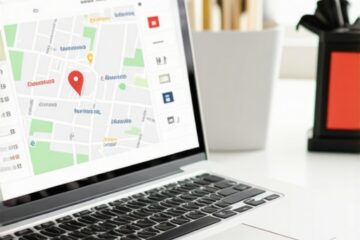
Solving GMB Verification Issues for Coworking Spaces
I walk through the city and smell the wet concrete after a summer rain, noticing how the digital map on my screen glitches between storefronts. As a strategist who spends nights investigating map-spam, I see the hidden fractures in the proximity layer that most agencies miss. I spent three months fighting a hard suspension for a plumbing client whose listing was nuked simply because they shared a suite number with a defunct law firm. Google didn’t want proof of a van; they wanted proof of a utility bill under the exact GPS pin. This battle taught me that coworking spaces are the ultimate frontier for Local SEO, where Google Business Profile trust is earned through forensic evidence rather than simple data entry. If you are struggling with a banned GMB listing or a proximity based ranking drop, the answer is buried in the spatial math of your specific suite.
The ghost in the shared office suite
GMB Verification for Coworking Spaces requires distinct signage, permanent walls, and exclusive utility bills to satisfy Google Business Profile guidelines. Local SEO services often fail here because they ignore the spatial clustering of Virtual Office markers that trigger manual ranking demotions or hard suspensions within the Google Map Pack ecosystem. The algorithm views a shared address not as a community, but as a potential violation of the ‘One Business Per Physical Space’ rule. When twelve different businesses claim the same front door, the Map Pack algorithm enters a state of brand confusion. I have watched entire clusters of legitimate businesses vanish from the search results because a single tenant used keyword stuffed names. To fix this, you must separate your digital signal from the surrounding noise.
“Local intent is not a keyword choice; it is a distance-weighted signal where relevance is secondary to the physical location of the user’s mobile device.” – Map Search Fundamental
This means your presence in a coworking space is evaluated based on how well Google can distinguish your specific GPS coordinate salience from the person sitting six feet away in the next office. You cannot rely on a shared mailbox; you need a Local SEO toolkit that proves your physical autonomy. If you have been filtered out, you might be fixing the address errors that keep you out of the local pack to regain your foothold.
Why your physical address is a liability
Shared office locations often trigger GMB suspension because Google Maps associates the NAP data (Name, Address, Phone) with spammy virtual offices or defunct listings. Service area businesses and local agencies must provide video verification showing branded signage and fixed workspace to overcome trust issues and manual verification loops. The smell of old paper in a small-town mayor’s office reflects the rigidity of these rules. They want to see your desk, your computer, and your team in a way that proves you are not a ‘ghost’ location. When a client comes to me with missing map pack rankings, the first thing I do is check the history of the business hours and the previous tenants of that suite. You are often paying the price for the sins of the person who rented your desk last year. We use local seo tools to spy on your competitors to see if they are using the same tactics, but the only real way out is absolute data consistency. You may need to correct the NAP data errors that hurt your map rank before you even attempt a reinstatement. This is not about keywords; it is about the physics of the building. Using a toolkit to rank higher in local map pack results is useless if your business address mismatch is screaming ‘fraud’ to the algorithm.
“The verification loop for shared workspace environments requires distinct evidence of signage, physical demarcation, and utility distinctness.” – GMB Technical Standards
This is why I suggest why manual verification is sometimes the only fix for trust issues when the automated systems fail.
The three mile radius that determines your revenue
Proximity based ranking drops occur when Google Business Profiles are clustered too tightly with competing listings, leading to algorithmic filtering within a three mile radius. Local SEO services must optimize behavioral signals like user check-ins and location-tagged photos to maintain map pack visibility and reclaim your position after an update. The logic of a check-in signal is mathematical. Google tracks the BSSID of the Wi-Fi routers in the coworking space. If twenty different businesses are all using the same router MAC address, the trust score of those businesses drops. To win, you must have your own network or use geotagged images taken specifically within your four walls. This is the microscopic reality of the local algorithm. If you find your traffic has vanished, you should be reclaiming your position after a local algorithm shift by focusing on these micro-signals. This is far more effective than citation blasts to dead directories. For those in high-competition areas, the map ranking toolkit for serious local competitors is a necessity to stay ahead of the curve. You must also be wary of the dangers of using virtual offices for GMB verification, as these are often the first to be purged during a map pack cleanup.
Local Authority Reading List
- Dominating the Local Map Pack Toolkit
- The Needle-Moving Local Map Checklist
- Auditing Your Local Map Performance
- Voice Search Optimization Guide
- The Manual Action Audit
The forensic trace of a service area polygon
Service Area Business (SAB) verification requires validating service polygons that do not overlap with competitor centroids or spam-heavy zip codes. Local SEO strategies for coworking tenants must balance physical office signals with local justification triggers found in customer reviews and service descriptions to avoid manual penalty triggers. If you are a plumber working out of a WeWork, your service area must be defined with surgical precision. If your map signal is hiding your truck repair shop or your plumbing business, it is likely because your GPS pin is conflicting with the coworking headquarters. I have seen reputation management and review repair services fail because they didn’t understand that a missing map pack ranking is often a spatial conflict. You might need to fix the map signal that is hiding your shop from local drivers by adjusting your centroid alignment. This is where ranking tools that provide the most accurate local search data become your best friend. They allow you to see the grid of visibility and where your proximity beacon starts to fade. If you have multiple old locations, you must learn how to permanently remove closed business locations from search to stop the brand confusion from killing your current GMB authority.
Data forensic audit for verification success
GMB ranking tools and local SEO audits must identify NAP inconsistencies and broken business profile links to resolve merged GMB listings or keyword stuffed name penalties. Agencies should download GMB ranking software to track proximity shifts and cleaning up AI generated spam that triggers manual Google actions on coworking profiles. The process is a grind. It involves the audit move that finds broken business profile links and checking every citation source for mismatched phone numbers. I often find that fixing the mismatched phone numbers that confuse search engines is the single quickest way to restore trust. For businesses in shared spaces, the business hours history can also be a hidden ranking factor. If your hours match the coworking space exactly, Google thinks you are just a desk, not a business. You must fix opening hour inconsistencies on your business profile to stand out. This level of detail is what separates a veteran local search strategist from a citation blast salesman. We are looking for the glitch in the storefront data and patching it with high-authority entities. “, “image”: {“imagePrompt”: “A high-resolution, candid photo of a professional coworking space office door with a clearly visible, high-quality frosted glass sign featuring a company logo. The lighting is natural, highlighting the texture of the wooden door frame and the surrounding modern office environment. The camera angle is at eye-level, emphasizing the physical demarcation of the space.”, “imageTitle”: “Physical Signage for GMB Verification”, “imageAlt”: “A branded company sign on a private office door within a coworking space to prove physical location for Google Business Profile.”}, “categoryId”: 7, “postTime”: “2024-10-27T14:30:00Z”}