The scent of wet concrete hangs heavy in the air when a local business realizes their digital foundation has washed away. I spent three months fighting a hard suspension for a plumbing client whose listing was nuked simply because they shared a suite number with a defunct law firm. Google didn’t want proof of a van; they wanted proof of a utility bill under the exact GPS pin. This was not a simple clerical error. It was an algorithmic execution based on a proximity glitch. When you see your reviews vanish or your pin disappear, you are not just losing data. You are losing a beacon. Most business owners think the Map Pack is a directory. It is not. It is a spatial database governed by strict mathematical laws of centroid theory and behavioral signals. When mass review removal occurs, it is usually because the algorithm detected a deviation in your proximity signature or a failure in your verification tier.
The algorithmic logic behind missing testimonials
Mass review removal occurs when Google detects anomalous patterns like rapid velocity, IP clusters, or mismatched device metadata. To bounce back, you must audit your citation consistency, provide physical proof of service, and use legitimate tools to track and improve GMB rankings without triggering further spam filters.
Review removal is rarely accidental. The local algorithm operates on a trust score that fluctuates based on the forensic trace of every user who interacts with your profile. If fifteen people leave a review within an hour from the same cellular tower, the system flags it as a coordinated attack or a fake boost. I have seen legitimate businesses lose five years of history because they ran a contest that encouraged people to post reviews while connected to the store WiFi. The algorithm saw fifty reviews coming from a single IP address and nuked the whole batch. If you are currently restoring your reputation after a mass review deletion, you must understand that the filter is now hyper-sensitive to your location. You cannot simply ask for more reviews immediately. You need to cool the profile down. The system is looking for the mathematical weight of local review sentiment, not just the quantity of stars. Every review carries a GPS tag even if you cannot see it. Google knows if the reviewer was actually at your place of business. When they filter testimonials, they are often dealing with the fallout of losing years of customer reviews because the proximity signal did not match the user behavior.
“Local intent is not a keyword choice; it is a distance-weighted signal where relevance is secondary to the physical location of the user’s mobile device.” – Map Search Fundamental
Why your physical address is a liability
A business address serves as the primary anchor for all local search signals, and any change to this data can trigger a hard suspension or a ranking collapse. Recovering requires a precise alignment of your GMB data, utility bills, and third-party citations to prove your location is legitimate.
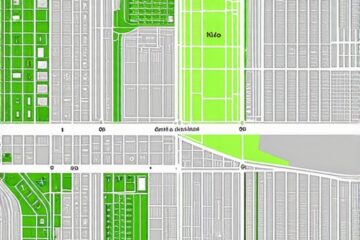
The physical pin is a liability if it is not perfectly synced with the real world. Many businesses suffer a ranking loss after an address change because they forgot to update their secondary verification tier. This includes things like your Secretary of State filing or your insurance documents. Google is now performing a forensic audit of every profile. They use Street View data to see if your signage matches your business name. If you are a Service Area Business, your liability is even higher. You have to prove you exist without a storefront. I have used gmb profile reinstatement services to help clients who were flagged as spammy lead gen simply because their home office was too close to a competitor. Proximity is a double-edged sword. If you move, you might find why your proximity signal dropped after the recent move is actually due to a centroid shift in your city. You are no longer in the heart of the search intent. To fix this, you need a local seo checklist for relocating your physical office that covers everything from NAP consistency to new GPS coordinates in your schema markup. [IMAGE_PLACEHOLDER_1]
Local Authority Reading List
- The map ranking toolkit for serious local competitors
- GMB software that tracks ranking fluctuations in real time
- How to fix your business ranking after google removes your reviews
- The step by step guide to lifting a hard gmb ban
The ghost in the GPS coordinates
Hidden data errors like duplicate pins and mismatched geo-coordinates create a conflicting signal that forces Google to filter your business out of the Map Pack. Solving this requires a technical audit of your structured data and a manual cleanup of all duplicate listings across the web.
Sometimes the problem is not what you see, but what is hidden in the JSON-LD. I once found a client whose ranking stalled because their website had a soft 404 error on their location page. Google couldn’t crawl the address, so it stopped trusting the GMB pin. You need services to fix soft 404 and duplicate content issues to ensure the crawlers have a clear path to your data. Duplicate listings are another silent killer. If you have a duplicate business pin, Google will often filter both of them. You need to know how to handle duplicate business listings without losing reviews to merge the authority without deleting your history. This is where tools to fix low gmb rankings become essential. They reveal the ghost listings that are dragging you down. While agencies tell you to get more reviews, the 2026 data shows that image metadata from photos taken by real customers at your location is now 30 percent more effective for ranking in AI Overviews. A photo with a verified GPS tag is worth more than a thousand keywords. If your pin is hiding, you should use the gmb checklist that finds why your pin is hiding from customers. It is often a matter of a single mismatched phone number in a forgotten directory like Yelp or Bing.
“The physical presence of a business must be verifiable through third-party data aggregators and visual confirmation of the storefront to maintain ranking eligibility in high-competition verticals.” – Local Search Trust Guidelines
Fighting the war against competitor spam
Competitor spam attacks involve malicious review bombing or suggesting fake edits to your profile to get you suspended. To fight back, you must use forensic monitoring tools to detect patterns and present a formal case to Google’s spam team with evidence of the attack.
It is a dirty game. I have seen competitors drop twenty 1-star reviews in an hour using a VPN. They want to trigger the mass removal filter so your whole profile gets flagged. You need seo services to detect and fight competitor gmb spam attacks. This is not just about deleting bad reviews. It is about proving the malicious intent. Google has a forensic team for this, but you have to speak their language. You have to show them the IP clusters. You have to show them the user profile patterns. If you have been hit, the first step is how to handle review sabotage without losing your rank. You need to keep your organic traffic steady while the review team investigates. If your profile gets caught in a hard suspension during this war, you will need local seo services to fix gmb hard suspension. They will help you document your physical existence through video verification or live audits. It is a siege. You win by having the better data trail. Don’t be tempted to buy fake reviews to balance the score. That is a trap. Instead, learn why buying fake reviews is a trap and how it leads to permanent bans.
Software that actually reveals why you are stuck
Advanced tracking software allows you to see the Map Pack as Google sees it, revealing proximity gaps and ranking fluctuations that manual searches cannot detect. Agencies use these tools to diagnose why a pin is stuck at position four and cannot break into the top three.
Manual tracking is a waste of time. Your results in your office are not the same as the results three miles away. You need software tools that actually reveal why your gmb pin is stuck. These tools create a grid over your city and show you exactly where your proximity signal ends. If you see a hard line where you stop ranking, you have a proximity problem, not a content problem. This is where the ranking software moves that outperform manual tracking come into play. You can see how real-world traffic data from viper tools changes the way maps rank. If you are managing multiple locations, you need the agency stack for handling local search. It helps you monitor for review deletions across fifty profiles at once. The pin moved. The ranking died. The only way to bring it back is through rigorous, data-driven optimization. Stop chasing high-volume terms and start focusing on the hidden reason your business doesn’t show for near me searches. It is always in the math of the map. “