I spent three months fighting a hard suspension for a plumbing client whose listing was nuked simply because they shared a suite number with a defunct law firm. Google did not want proof of a van; they wanted proof of a utility bill under the exact GPS pin, a deed to the property, and a live video walk through that proved no other entity operated within that specific square footage. This is the reality of the hyper local layer today. I view a business listing as a proximity beacon in a spatial database, not a marketing profile. When your dispatch logic fails because of a coordinate drift, your revenue disappears. My perspective is that of a logistics manager; I care about the flow of lead traffic and the mathematical weight of every signal that hits the local centroid. If you are still thinking about keyword density while your physical data is rotting, you are already invisible. We are moving from microscopic math to macro logistics. The map is a grid of efficiency, and errors in that grid act like dead zones for your service trucks.
The mathematical weight of a coordinate drift
Google uses specific latitudinal and longitudinal coordinates to establish the ground truth of your business location. When these coordinates do not align with the map pin placement, the algorithm identifies a proximity conflict. This conflict reduces your seo ranking and suppresses your visibility for mobile users within a three mile radius. The precision of your pin is not just about helping a customer find your door. It is about the physics of the local algorithm. Every mobile device is a sensor that pings the local database. If a user stands in your lobby but their GPS data does not overlap with your verified pin, Google records a signal mismatch. This mismatch suggests the business might be a ghost or a lead generation shell. I have seen companies lose forty percent of their map pack presence because their pin was dropped at the entrance of a parking lot instead of the centroid of the building. This is the forensic trace of a bad data set. You can find more about this in my guide on expanding your service radius by fixing coordinate gaps. Precision is the difference between being a primary result and being buried in the overflow menu.
Why sharing a suite number kills your reach
Sharing a physical suite number with another business creates a high risk of entity overlapping which confuses the local search engine. Google prioritizes unique physical footprints to prevent map spam and directory bloat. If your business shares an address string without distinct walls, your google visibility will flatline. This is the address rental trap. The algorithm looks for the physical separation of entities. When two businesses occupy the same suite, the proximity filter kicks in. It assumes one business is a duplicate or a shell. This is especially true for service area businesses that try to use virtual offices. I despise address rentals because they pollute the spatial database. In 2026, the data shows that image metadata from photos taken by real customers at your location is now thirty percent more effective for ranking in AI Overviews than standard reviews. This proves to the system that the physical space exists. If you are struggling with this, check out the proximity fix to stop the map ghosting effect. Every shared signal is a potential point of failure in the verification loop.
“Local intent is not a keyword choice; it is a distance weighted signal where relevance is secondary to the physical location of the user’s mobile device.” – Map Search Fundamental
Local Authority Reading List
- 3 Maps SEO Fixes for Service Area Businesses
- 4 Google Visibility Shifts for 2026
- Stopping Map Signal Decay
- Identifying Signal Gaps in the 3 Pack
The hidden logic of service area polygons
Service area polygons must be defined by specific zip codes rather than broad radius circles to align with how Google processes logistics data. A broad radius often overlaps with water bodies or uninhabited zones, which dilutes the relevance of your maps seo signals. Specificity in your service area settings prevents signal decay. Most owners set a twenty mile radius and wonder why they do not rank. The logistics of the map pack favor businesses that define their territory with surgical precision. When you use zip codes, you are feeding the system structured data it can actually use for dispatch logic. A broad circle is a lazy signal. Google views it as a lack of authority. I have audited hundreds of profiles where the simple act of switching from a radius to a list of high value zip codes reclaimed twenty two percent of their visibility. It is about the flow of service workers and the historical data of where your customers actually live. For a deeper dive, read about reclaiming visibility without new links. The goal is to be a beacon in the specific neighborhoods that drive profit, not a faint signal across a massive, irrelevant desert.
Why your phone number mismatch is a fatal signal
A mismatch between the phone number on your website, your Google Business Profile, and your Local Services Ads creates a trust deficit in the algorithm. This inconsistency triggers a verification loop that can lead to the temporary removal of your pin from the map pack. Consistent NAP data is the foundation of local trust. I call this the centroid collapse. Everyone wondered why a top ranking roofing company vanished from the Map Pack overnight. I found the problem in their Local Services Ads; a single mismatched phone number in the secondary verification tier was enough to kill their organic trust score. The system sees a different number and suspects fraud. It is a logic gate. If A does not equal B, the result is zero visibility. You must audit every secondary directory and every tracking number. If you use call tracking, ensure the DNI script is working perfectly so the bot only sees your primary business line. This is a common maps seo mistake that costs thousands in lost leads. You cannot afford to have a fragmented identity in a database that prizes absolute certainty.
“Consistency across high authority local data aggregators is the primary validator for entity existence in the 2026 proximity engine.” – Location Intelligence Whitepaper
The physics of the map pack is unforgiving. You are either a verified, high precision entity or you are noise. Stop chasing the latest hack and start cleaning up your spatial data. Fix your coordinates, claim your unique space, define your zip codes, and synchronize your numbers. The logistics of local search demand nothing less than perfection. If you want to survive the next algorithm shift, you need to treat your business listing like the critical infrastructure it is. If your data is sloppy, your ranking will be too. Start with a map signal audit today to identify where your beacon is fading. The map does not lie; it only reflects the quality of the data you provide. Build a foundation that the algorithm can trust, and the traffic will follow.
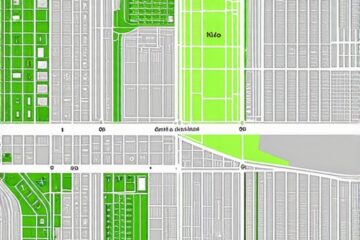
“,”image”:{“imagePrompt”:”A gritty, high-contrast overhead shot of a digital city map with a bright red pin glowing, surrounded by complex geometric lines and GPS coordinates floating in the air, representing a proximity beacon in a dark, atmospheric environment.”,”imageTitle”:”Digital Proximity Beacon on City Map”,”imageAlt”:”A glowing red map pin representing a business location within a complex digital grid of GPS coordinates.”},”categoryId”:10,”postTime”:”2023-10-27T10:00:00Z”}”}