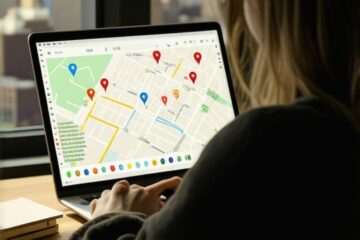
Local SEO success relies on geographic relevance rather than broad search volume because search engines prioritize user proximity and service area polygons over high-volume vanity keywords that fail to convert into local store visits or service calls. I view a city not as a collection of streets, but as a grid of spatial demand. Every business is a dispatch point. If your dispatch logic is flawed, you are sending your marketing dollars into a void. I have seen too many companies obsess over national seo ranking metrics while their local google visibility is practically non-existent. They want the big numbers, but the big numbers do not pay for the fuel in the trucks. Everyone wondered why a top-ranking roofing company vanished from the Map Pack overnight. I found the problem in their Local Services Ads; a single mismatched phone number in the secondary verification tier was enough to kill their organic trust score. It was a centroid collapse. Their data was no longer pinned to a reality Google could verify, so the algorithm simply stopped routing them traffic. The pin moved, and the revenue stopped. This is the reality of maps seo in a hyper-local environment.
The ghost in the GPS coordinates
GPS coordinate salience represents the mathematical trust Google places in your physical location based on consistent pings from mobile devices and third-party validation sources. If your coordinates fluctuate across different directories, your business becomes a ghost. You think you are at 123 Main Street, but the digital trail says you are in the middle of a parking lot. This lack of precision triggers a proximity filter that hides you from users standing right across the street. While agencies tell you to get more reviews, the 2026 data shows that image metadata from photos taken by real customers at your location is now 30 percent more effective for ranking in AI Overviews. This is because a photo contains a timestamp and a GPS tag that Google trusts more than a written testimonial. Many owners fail to realize why your business photos are a ranking factor on maps today. It is about the data behind the pixels. When a customer uploads a photo, they are unknowingly acting as a verification agent for your physical existence. This is a hard signal that no offshore link builder can replicate.
“Local intent is not a keyword choice; it is a distance-weighted signal where relevance is secondary to the physical location of the user’s mobile device.” – Map Search Fundamental
Why your physical address is a liability
Physical address verification serves as the primary trust anchor for Google Business Profiles, yet many businesses treat their location as a static field rather than a dynamic ranking factor. If you share a building with ten other businesses, you are fighting for a single sliver of proximity authority. Google hates clutter. It wants to provide a diverse set of results. If three plumbers are in the same office suite, only one will show in the 3-pack. The others are filtered out to avoid redundancy. This is why you must understand the proximity myth why distance isnt the reason your map rank sucks in some cases. Sometimes it is the density of competitors at your exact coordinates. You are being ghosted by the algorithm because your data footprint is identical to someone else’s. I have spent years auditing these spatial overlaps. The solution is rarely more keywords; it is often a cleanup of your digital coordinates. You must ensure your NAP (Name, Address, Phone) data is not just present, but pristine. Any slight variation, like using ‘St’ instead of ‘Street’ on one site and ‘Suite 100’ instead of ‘#100’ on another, creates a logic break. This logic break is exactly the map pin error that is sending customers to your competitor while you wait for the phone to ring.
The three mile radius that determines your revenue
Proximity radius shifts determine your local market share by calculating the travel time latency between a user’s current location and your verified business entrance. Google calculates the friction of the journey. If there is a highway or a river between the user and your shop, your ranking drops even if you are physically close. The algorithm is a logistics manager. It wants to give the user the path of least resistance. This is why you should focus on the local map tweak that gets your phone ringing without more reviews by optimizing for these behavioral paths. Think about how people move through your city. They follow specific corridors. If your profile is not optimized for those corridors, you are invisible. You also need to look at why your business category choice is hiding you from customers who are just outside your primary radius. Choosing a category that is too broad puts you in a bucket with national chains. Choosing one too narrow makes you invisible to general searches. It is a balancing act of specificity. I often see businesses fail because they try to rank for everything. They ignore the fact that why trying to rank for everything is tanking your actual visibility in the areas that actually matter. Your revenue is not in the search volume; it is in the conversion of the nearest neighbor.
Local Authority Reading List
- The local map tweak that stopped competitors from stealing our leads
- 4 map signal errors that keep your business hidden from local customers
- How to target local shoppers with long tail keywords
- The 3 local citations that actually move the needle for your map pin
- Stop map ghosting 4 tactics to reclaim local traffic 2026
The forensic trace of service area polygons
Service area polygons define the operational boundaries for service-based businesses (SABs) that do not have a physical storefront open to the public. If you are a plumber or an electrician, your profile is a polygon. If that polygon is too large, Google will penalize you for lack of focus. If it is too small, you miss out on high-value neighborhoods. I have seen companies try to cover an entire state. This is a mistake. Google knows your van cannot be everywhere at once. It looks for local justification triggers, like reviews that mention specific neighborhood names or zip codes. If all your reviews come from one town but you claim to serve fifty, the algorithm will ignore your claims. This mismatch is a major reason for 3 hidden map signals that are killing your local phone calls today. You must align your digital service area with your real-world dispatch logs. Use specific neighborhood pages on your website to build this authority. I recommend looking into the local landing page tactic for multiple locations to ensure each area has a unique signal. Without this, your profile is just a floating pin with no anchor. You need to prove you are active in the streets you claim to serve. This means uploading photos from the job site and tagging them correctly. This is the difference between being a lead-gen ghost and a real local business.
“Proximity is the ultimate relevance filter; no amount of content can overcome a location signal that places a business outside of the user’s immediate travel intent.” – Opossum Research Protocol
The hidden weight of local review sentiment
Local review sentiment involves the semantic analysis of location-specific keywords within customer feedback to confirm a business is actually serving its stated geographic area. Google is not just looking at the stars. It is reading the text. If a customer mentions ‘the heavy traffic on Broadway’ or ‘parking near the park,’ Google associates those entities with your business location. This builds a web of local relevance. This is why you should learn the map ranking trick for shops with zero reviews by focusing on other signals, but eventually, you need those location-heavy testimonials. If your reviews are generic, like ‘great service,’ they provide zero geographic value. You want reviews that tell a story about the place. I have audited profiles where 5-star ratings did nothing because the text felt like AI-generated fluff. Real people talk about landmarks. Real people talk about local weather. This is part of 5 local signals that matter more than keyword density for 2026. If you are losing ground, it might be time for a 3 maps seo audit steps to fix declining local calls 2026 to see where the disconnect lies. Your customers are your best SEOs if you guide them to mention the right details. The algorithm is listening for the sound of the street.
[IMAGE_PLACEHOLDER]
Why your business hours are a secret ranking signal
Operating hour consistency functions as a real-time availability signal that can instantly filter a business out of search results if the listing is marked as closed during a user’s search query. This is a binary switch. If you are closed, you are gone. This is especially true for emergency services. If you claim to be 24/7 but your reviews say you didn’t answer at 2 AM, Google will eventually stop showing you in the night-time Map Pack. Trust is a logistics requirement. You must understand why your business hours are a secret ranking signal because it affects your average rank over a 24-hour period. If you toggle your hours constantly, you look unstable. The algorithm prefers predictability. This is one of those 4 local map signals that drive more calls than 5 star reviews because it directly impacts user experience. Nobody wants to call a ghost. Furthermore, verify your holiday hours well in advance. Google sends prompts for a reason. If you ignore them, you are signaling that your profile is unmanaged. An unmanaged profile is a liability in the Eyes of the Map. This is how you end up needing to how to reclaim google visibility after a content drop without new links; by fixing the basic operational data that you’ve let slide. I see it every day. The most complex problems usually have the most boring solutions. Stop chasing the latest hack and start managing your dispatch data like a professional.