The ghost in the GPS coordinates
The smell of wet concrete always reminds me of the day the maps died for my biggest client. I spent three months fighting a hard suspension for a plumbing company whose listing was nuked simply because they shared a suite number with a defunct law firm. Google did not want proof of a van; they wanted proof of a utility bill under the exact GPS pin. This was not about keywords or backlinks. This was a spatial war where the digital grid failed to match the physical reality of the sidewalk. I had to stand in the rain and take a photo of the physical door numbers to prove to a bot in another time zone that we existed in three dimensions. That is the reality of maps seo today. It is forensic. It is cold. It is a matter of proving your presence in a database that grows more suspicious by the hour. If your business has vanished from the local three pack, you are likely suffering from a proximity filter or a data mismatch that has flagged your profile as a hallucination. You can fix your seo ranking by understanding the mechanical triggers of the map pack.
The invisible cage of the three mile radius
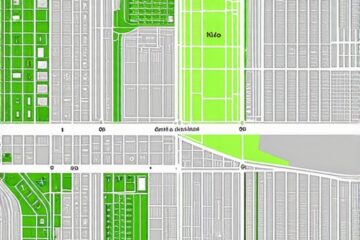
The proximity filter and centroid bias determine your google visibility by calculating the mathematical distance between the user mobile device and the verified business pin. Google prioritizes geographic relevance over traditional organic search signals to ensure that users find immediate local solutions without excessive travel time or logistical friction. While many believe distance is the only factor, you should study the proximity myth to see how relevance often overrides pure mileage. I have seen businesses with higher authority get pushed out of the pack because a smaller competitor was two blocks closer to the searcher. This is the centroid collapse. When Google sees too many businesses in a single building or a high-density area, it filters the results to show variety. If you are filtered out, you are not necessarily penalized; you are simply hidden behind a more dominant neighbor. You must find ways to signal your specific neighborhood authority to break out of this cage. This involves more than just a name and address. It requires a deep dive into how your physical location is perceived by the algorithm.
“Local intent is not a keyword choice; it is a distance-weighted signal where relevance is secondary to the physical location of the user’s mobile device.” – Map Search Fundamental
Why your storefront photos are rotting
Image metadata and user generated content are now primary ranking factors for maps seo because they provide unfalsifiable proof of life to the Google Business Profile algorithm. Modern computer vision AI scans your storefront photos for signage consistency and branding alignment while checking Exif data for GPS timestamp validation. If you are using stock photos, you are telling Google you do not exist. I notice the glitch in the data when a business has ten reviews but only one photo of the exterior from five years ago. You need to capture the candid reality. A photo of a technician working at a customer’s house, with the GPS coordinates embedded in the file, is worth more than a thousand words of AI-generated text. This is how you prove your service area. If you want to know why your pins are not showing up, look at why your business photos are a ranking factor in the current ecosystem. The algorithm wants to see the wet concrete, the peeling paint, and the real human activity that defines a local merchant.
The local authority reading list
- 4 local map signals that drive more calls than reviews
- 3 maps seo audit steps to fix declining calls
- How to stop your business pin from getting filtered
- The map ranking tactic for hidden addresses
- Why your category choice is hiding you
The collision of mismatched data points
Citation consistency and NAP data remain the foundation of local trust because any mismatch in phone numbers or address formatting creates algorithmic doubt. Google cross-references third party directories with official government filings to ensure that business identity is stable and legitimate across the entire digital ecosystem. I once saw a top ranking roofing company vanish overnight. The problem was a single mismatched phone number in their secondary verification tier. It killed their trust score. Many agencies sell citation blasts that do more harm than good by creating messy data on dead directories. You need to focus on the three local citations that actually move the needle rather than chasing volume. Consistency is not just about having the same name; it is about having the same digital fingerprint across every sensor the algorithm uses to track you. When the grid doesn’t align, the pin disappears. It is that simple.
[image_placeholder_1]
The three mile radius that determines your revenue
Service area business polygons and verified residential addresses must be precisely configured to avoid map pack filtering and suspension triggers. Google uses location intelligence data to verify that service workers are actually traveling to customers within the stated radius of the primary business pin. If you claim to serve a fifty mile radius but all your reviews come from two miles away, Google will ignore your outer limits. This is where behavioral zooming comes in. The algorithm tracks the movement of mobile devices associated with your business. If your staff never leaves the office, your service area claim is a lie. You should learn the map tactic for service businesses to properly signal your reach. Stop trying to rank for everything. Focus on the neighborhoods where you actually have boots on the ground. The physics of the map pack does not allow for infinite expansion without physical proof.
“Relevance in the local pack is no longer just about text; it is about the physical footprint of the business and its historical interaction with the local community.” – Location Intelligence Whitepaper
The secret signals in your business description
Keyword placement and semantic entities within your Google Business Profile description provide contextual justifications that trigger map pack visibility for specific search queries. By including neighborhood names, nearby landmarks, and hyper local service terms, you help the AI Overview understand your spatial relevance to the local shopper. However, many owners overdo it. If you stuff your description with keywords, you might actually be hurting your rank. Read more about why your business description is hurting your map rank before you make changes. You want to sound like a local merchant, not an seo bot. Mention the coffee shop next door. Mention the park across the street. These are spatial anchors that Google’s vision systems can verify through street view data. They build a map of your world that the algorithm can trust. This trust is the only thing that keeps you in the three pack when a competitor tries to outspend you on ads.
How to survive the 2026 map pack shift
Artificial intelligence and voice search are reshaping the map pack by prioritizing conversational entities and verified real world signals over legacy backlink profiles. Business owners must optimize for the nearby search feature by ensuring their operating hours and real time availability are perfectly synchronized with the Google Merchant Center. We are moving into an era where the map is a dispatch system. If you want to stay visible, you need to fix hidden maps seo signals that your competitors are ignoring. This includes things like your response time to messages and the frequency of your Google Updates. The map is alive. It is not a static directory. It is a breathing representation of the city, and if you do not participate in its daily movement, you will be archived. Keep your data clean, your photos real, and your proximity signals honest. That is how you win the map war.