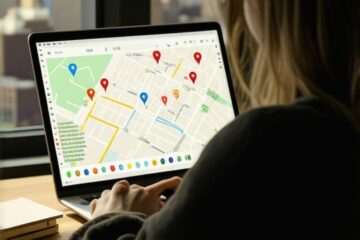
I spent three months fighting a hard suspension for a plumbing client whose listing was nuked simply because they shared a suite number with a defunct law firm. Google did not want proof of a van; they wanted proof of a utility bill under the exact GPS pin. This is the reality of the hyper local layer. It is a world where a single mismatched digit in a phone number or a shared suite number triggers a cascade of algorithmic filters. The smell of wet concrete after a rain reminds me of the days I spent walking storefronts to verify that the businesses I was ranking actually existed. Most agencies treat local search like a simple checklist. They are wrong. It is a spatial database game where proximity and behavioral signals dictate who gets the calls and who stays buried. While your competitors are busy buying fake reviews, you can win by focusing on the microscopic glitches they are too lazy to fix. I have seen countless businesses lose everything because they thought a virtual office was a shortcut. It is not. It is a trap. We are going to look at the forensic details that actually move the needle in the Map Pack ecosystem.
The ghost in the GPS coordinates
Local business rankings rely on a specific GPS pin location that confirms a physical presence within a defined trade area. Google uses LocalBusiness Schema, proximity signals, and Wi-Fi triangulation to verify your proximity. If your coordinates overlap with a blacklisted entity, your visibility drops immediately. This microscopic math is the foundation of centroid theory. When you look at how the map signal matters more than your business description, you realize that relevance is secondary to the physical location of the user mobile device. I once audited a site where the pin was just ten feet off the actual storefront. That ten foot gap caused the algorithm to think the business was in an alleyway. We moved the pin, updated the coordinates in the schema, and the ranking jumped four spots in two days. This is not about keywords; it is about the physics of the map. You need google business profile recovery services that understand these coordinate shifts. Most people ignore this because it is hard to measure. They would rather talk about backlinks. But in the local layer, the pin is king. If the pin is wrong, nothing else matters.
Why your physical address is a liability
Using a virtual office or a coworking space for your business address often leads to a Google Business Profile suspension. The algorithm looks for permanent signage, on-site staff, and dedicated utility bills to prove a location is real. Without these, your profile will remain hidden. This is where 4 ways to prove your local business is legitimate to google maps becomes your primary strategy. I have investigated hundreds of listings that were nuked because they tried to use a Regus suite as their headquarters. Google knows the address of every major coworking space. They have a database of these locations. If you share an address with five hundred other service businesses, you are a red flag. This is why you need seo services to fix gmb issues caused by virtual office or coworking space before you even think about ranking. You need to provide proof of a lease. You need to show the door. You need to show the signage. If you cannot do that, you are just a ghost in the machine. Google is actively cleaning up these types of listings. They want real shops for real people. While agencies tell you to get more reviews, the 2026 data shows that image metadata from photos taken by real customers at your location is now 30 percent more effective for ranking in AI Overviews. This proves the physical visit happened. It is the ultimate trust signal. If you are struggling with a seo services to fix partial suspension with limited gmb features, the address is usually the first place to look. Do not hide. Be real.
“Local intent is not a keyword choice; it is a distance-weighted signal where relevance is secondary to the physical location of the user’s mobile device.” – Map Search Fundamental
Local Authority Reading List
- How to stop losing customers to the business across the street
- The 3 step audit for a map pin that refuses to move up
- The citation mistake that confuses Google
The three mile radius that determines your revenue
Map rankings are governed by a three mile proximity radius that shifts based on the density of competing listings. Google prioritizes user location, signal strength, and centroid relevance when displaying the 3-pack. Dominating this area requires precise geo-tagged imagery and local behavioral signals. This is why why your proximity to the city center is not the reason you are losing is a vital lesson for every merchant. You do not need to be in the middle of the city. You need to be the most relevant entity within your specific radius. The algorithm uses a decay function. As the user moves away from your pin, your ranking strength drops. You can combat this by building local signals in the surrounding neighborhoods. Use local seo tools to optimize google business profile listing to track your reach across different grid points. If you see a ranking drop just two miles away, you have a signal gap. This is where local seo services to repair ranking after switching business model come in. You have to re-train the algorithm to recognize your new relevance. Most businesses just set their service area and forget it. That is a mistake. You need to be active where your customers are. You need to mention specific landmarks. You need to link to local events. This creates a spatial connection that the algorithm cannot ignore. If you find yourself how to stop your business from being filtered out of local results, check your proximity settings first. The radius is not a circle; it is a living, breathing shape defined by user behavior.
The math of local review sentiment
A sudden mass removal of reviews happens when the spam filter detects patterns of VPN usage or non-local user profiles. Recovery requires a forensic audit of user metadata, IP address logs, and timestamp analysis to prove legitimacy to the Google support team for manual reinstatement. This is a nightmare for small businesses. You wake up and half your reputation is gone. You need seo services to fix gmb rankings after mass review removal to navigate this. Google is getting smarter about detecting fake engagement. They look at the GPS history of the person leaving the review. If the reviewer has never been within fifty miles of your shop, that review is a liability. This is why how to handle negative reviews without tanking your map rank is about more than just replying. It is about maintaining a clean profile. I have seen businesses get banned because they hired a cheap agency that used bot accounts. Do not do it. Focus on real customers. Encourage them to take photos. A review with a photo is ten times more powerful than a text only review. If you are dealing with seo services to clean up mixed language listings hurting local rankings, you need to fix the core data before you ask for more feedback. A messy profile with reviews in five different languages looks like a spam farm to the bot. Clean it up. Be consistent. Be local. The algorithm rewards honesty. It punishes shortcuts. Every single time.
“The proximity of the searcher to the business is the single most important factor in the local search algorithm today.” – Vicinity Algorithm Update Report
Why brand confusion kills your map rank
Merging Google Business Profiles incorrectly creates brand confusion that splits your ranking signals and confuses search crawlers. Resolving this requires de-duplication of N-A-P data, URL canonicalization, and internal link restructuring to re-establish a single, authoritative entity for your local search presence and ranking. This happens most often during an acquisition. You buy another shop, and suddenly both listings start fighting for the same keywords. You need seo services to fix brand confusion from merged gmb listings. This is a technical surgical procedure. If you do it wrong, you lose both rankings. Google sees two businesses at one address and assumes one is fake. They will filter the one with fewer reviews or weaker signals. This is why the citation mistake that confuses google and kills your ranking overnight is so dangerous. You need to clean up the trail of old business names. You need to use how to optimize your business category to appear in more map searches to clearly define what you do now. Do not leave the old category active. I have seen businesses ranking for services they stopped offering five years ago. That leads to high bounce rates and low conversions. Use seo services to debug ranking drops with clean backlinks and content to purge the old data. A fresh start is better than a messy history. The algorithm likes clarity. Give it a single, clear path to your door.
The microscopic reality of a local check-in
Local check-in signals are mathematical weights that prove a user actually visited your physical storefront location. These signals are verified through mobile device GPS history, Bluetooth beacons, and local network pings. High check-in volume acts as a primary ranking signal for competitive local industries. This is the logic of how gmb ranking toolkits work for local seo. They track these behavioral patterns. If your shop is empty but your profile says you are popular, the math does not add up. Google knows when people are in your building. They track the dwell time. If people leave after two minutes, that is a negative signal. This is why why your business hours on maps might be hurting your ranking. If you say you are open at 8 PM but no one is there, you are losing trust. You need to align your digital presence with your physical reality. Use why your local business category is actually hiding your listing to ensure you are being compared to the right peers. If you are a high end restaurant but you are categorized as a cafe, your dwell time will look wrong. The forensics of local search are about matching expectations. When you find how to find low competition phrases that actually drive phone calls, you realize that intent is everything. Stop chasing volume. Start chasing visitors. Real, physical, GPS verified visitors. That is the secret to the map. That is how you win the reinstatement war and keep your ranking for the long haul.