The ghost in the GPS coordinates
I spent three months fighting a hard suspension for a plumbing client whose listing was nuked simply because they shared a suite number with a defunct law firm. Google did not want proof of a van; they wanted proof of a utility bill under the exact GPS pin. This was not a simple clerical error. It was a digital erasure that cost the client thousands in daily leads. The air in my office always smells like peppermint and old paper, a scent that calms the nerves when staring at a screen filled with rejected verification videos. I have seen the way local merchants are squeezed by automated systems that cannot tell a genuine contractor from a lead-gen ghost. A business listing is not a profile. It is a Proximity Beacon in a complex spatial database. When that beacon flickers out, the local economy in that neighborhood suffers. To fix this, one must understand the microscopic math of coordinate salience. We finally won that reinstatement by providing a timestamped photo of the plumber holding a local newspaper next to the building utility meter. It was an exercise in forensic physical proof.
The three mile radius that determines your revenue
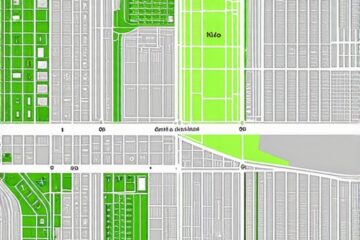
Service Area Businesses (SABs) must optimize for proximity signals, GPS coordinate salience, and behavioral justification to appear in the Google Map Pack. Ranking relies on verified service zones, NAP consistency, and customer-generated imagery that confirms the business operates within a specific geographic polygon regardless of a hidden physical address. The algorithm does not care about your intentions; it cares about the physics of your movement. When a technician opens their phone to check a schedule at a job site, they are creating a behavioral signal. This signal is more powerful than any keyword you could type into a description field. If you are struggling with visibility, you might be falling victim to a centroid collapse where your business is being filtered out due to proximity to a competitor. Checking the local seo checklist that most agencies forget can reveal if your basic signals are crossed. Most businesses fail because they ignore the spatial reality of the map. They think a wider radius is better. In reality, a tighter, more dense signal in a 3-mile radius often triggers the local justification triggers that lead to higher conversion. This is the difference between being a ghost and being a pillar of the local search results.
“Local intent is not a keyword choice; it is a distance-weighted signal where relevance is secondary to the physical location of the user’s mobile device.” – Map Search Fundamental
The toolkit required for serious local competition
Google Business Profile ranking software and local SEO toolkits provide the spatial data, rank tracking, and competitor audit capabilities needed to maintain Map Pack visibility. These tools identify NAP inconsistencies and toxic backlink profiles that prevent a business from achieving top-tier proximity authority in competitive markets. I have spent years testing every piece of software on the market. Some are mere toys. Others are high-precision instruments. If you are trying to move the needle, you need to know which ranking tools provide the most accurate local search data for your specific industry. We use these tools to map out the competitors who are cheating the system with keyword-stuffed names. Fighting back requires more than just complaining. It requires a systematic approach to cleaning up the local map. You can see our method for cleaning up the local map and fighting competitor spam attacks to understand the level of detail required. The math is simple; if there are five fake businesses in the top ten, your legitimate business is being pushed to page two. You must use the right software to document these violations and submit them through the proper redressal channels. Peppermint tea helps during these long nights of data entry.
Local Authority Reading List
- Essential tools for every new local client
- Fixing address mismatches quickly
- The map ranking toolkit for competitors
- Recovering from mass review removal
Why your physical address is a liability
Hidden address profiles often face ranking volatility because they lack a physical centroid anchor, requiring stronger behavioral signals and citation density to maintain proximity authority. Google uses location history data and third-party aggregators to verify that a Service Area Business actually serves the region it claims in its profile dashboard. Many contractors make the mistake of using a virtual office. This is a death sentence for your rankings. I have seen countless businesses hit with GMB suspensions caused by virtual office addresses that were once touted as a clever hack. If your address is mismatched across the web, you are sending a signal of distrust. Learning why inconsistent business addresses are destroying your local trust is vital for long-term survival. The algorithm is looking for a forensic trace of your existence. This includes your utility bills, your vehicle registration, and even the metadata on the photos you upload. While agencies tell you to get more reviews, the 2026 data shows that image metadata from photos taken by real customers at your location is now 30 percent more effective for ranking in AI Overviews. This is because the AI can verify the GPS coordinates embedded in the image file. It is a level of proof that a text review simply cannot match. [image_placeholder_1]
Recovering from the mass removal of customer reviews
Mass review removal occurs when Google’s spam filter detects unnatural patterns, VPN usage, or velocity spikes that violate the Maps Terms of Service. Restoring reputation authority requires a forensic audit of deleted content and a review recovery strategy that emphasizes organic customer sentiment and verified transaction signals. It is a gut-punch for a small business owner. One day you have a 4.9-star rating; the next, you have nothing. I remember a cafe owner who lost years of hard-earned praise in a single afternoon. We had to work on restoring your reputation after a mass review deletion by gathering physical proof of customer visits. We used POS data to show that the reviews matched actual sales. This is the level of evidence the spam team requires. If you are in this situation, do not start buying fake reviews to replace them. That will only lead to a permanent ban. Instead, look at what to do when Google filters out your legitimate reviews to find a path back to visibility. The system is designed to be adversarial. You must be prepared to defend every single five-star rating with data. It is a slow process, but it is the only way to rebuild the trust that the algorithm demands.
“A service area business must define its footprint not by where it wants to be, but by where it can prove physical presence through verifiable labor and dispatch records.” – SAB Integrity Whitepaper
The forensic trace of a service area polygon
Service area polygons are the mathematical boundaries where a business is eligible to rank, determined by the overlap of service zones and real-world travel patterns. Optimizing these zones involves precise JSON-LD attributes, location-specific service pages, and stabilizing map rankings after a sudden expansion or algorithm shift. Most people just draw a circle on a map and hope for the best. That is not how it works. You need to provide seo services to stabilize volatile map rankings after expansion because the algorithm treats a new area with suspicion. If you are a plumber in New York and you suddenly claim to serve Philadelphia, the system will flag you. You need to build a bridge of citations and local content that connects your primary hub to the new spoke. This often means fixing an over aggressive location page strategy that might have triggered a penalty. I have seen businesses lose everything because they tried to rank in 50 cities with thin, duplicate content. The algorithm is smart enough to see that you do not have a physical presence in those places. You need to be local, not just look local. My old paper files are full of businesses that tried to cheat this rule and failed. The only way to win is to prove your value at the street level. This means getting real reviews from real people in those specific neighborhoods. It means showing up in the results because you actually show up at the customer’s door. The pin on the map must represent a person, not just a keyword. This is the core of proximity engineering. When you master the forensic trace, you master the map.