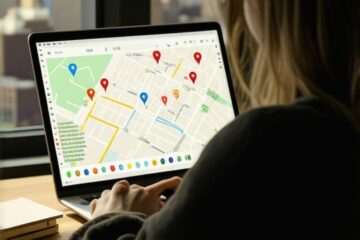
The hidden mechanics of high converting local search terms
I spent three months fighting a hard suspension for a plumbing client whose listing was nuked simply because they shared a suite number with a defunct law firm. Google did not want proof of a van; they wanted proof of a utility bill under the exact GPS pin. This battle taught me that a Google Business Profile is not just a digital listing. It is a proximity beacon in a complex spatial database. When the pin moved even a fraction of a degree, the rankings vanished. This microscopic reality of the local algorithm dictates whether a business survives or dies in the Map Pack. You must treat your location data with the same precision as a forensic investigator tracing a crime scene. A single mismatched phone number or a service area polygon that overlaps with a competitor too aggressively can trigger a filtering event that hides your brand from every local searcher. We are playing a game of coordinate salience, where the mathematical weight of local review sentiment and the physics of a three mile radius shift determine your daily lead flow.
The reinstatement war that changed my strategy
Google Business Profile recovery services and emergency SEO tactics are often required when a listing faces a hard suspension due to address inconsistencies. My experience shows that verifying a business address requires physical evidence like lease agreements and utility bills to satisfy Google support. I learned the hard way that fixing GMB suspensions caused by virtual office addresses is a technical nightmare that most agencies are not prepared to handle. The algorithm tracks the forensic trace of your business identity across the entire web. If you have been using a coworking space or a rented mailbox, the proximity filter will eventually catch you. The shift from the Opossum update to the Vicinity update made distance the primary ranking factor, often outweighing relevance and even review counts. This means that your physical address is either your greatest asset or your biggest liability. Every change to your profile must be calculated. I have seen companies lose everything because they thought they could edit their name for a quick ranking boost, but instead, they triggered an automated suspension that took months to reverse.
“Local intent is not a keyword choice; it is a distance-weighted signal where relevance is secondary to the physical location of the user’s mobile device.” – Map Search Fundamental
How gmb ranking toolkits work for local seo
GMB ranking toolkits function by scraping search engine results pages across a grid of specific latitude and longitude coordinates to visualize local search visibility. These SEO toolkits provide ranking heatmaps that identify where a business profile loses Map Pack presence as a user moves away from the business centroid. Understanding the proven toolkit for dominating the local map pack is vital for anyone managing multiple locations. These tools do not just check if you are ranking; they check where you are ranking. A business might be number one if the user is standing in their lobby, but fall to number ten if the user is two blocks away. This is the proximity decay. Ranking toolkits help you identify these gaps. They analyze the technical health of your profile, looking for errors in your JSON-LD schema or structured data that might be confusing the local bot. By identifying the exact keywords that trigger a Map Pack result, you can focus your content strategy on high-intent terms rather than generic industry phrases that don’t drive local phone calls.
The math of proximity and behavioral signals
Proximity filters and user behavioral signals like click-through rate and driving direction requests are the primary drivers of local map rankings. Google uses Wi-Fi triangulation and GPS data to determine if a user actually visited a storefront, creating a real-world trust signal that is difficult to fake with spam reviews. If you want to stay ahead, you need to be researching GMB keywords with an eye for intent. The algorithm is watching how people interact with your profile. Do they click the call button? Do they scroll through your photos? Each of these actions is a vote of confidence in your local relevance. If a competitor has a higher engagement rate, they will eventually jump over you in the rankings, even if your site has better backlinks. This is why high-quality photos and updated posts are not just for show; they are ranking factors. They keep users on your profile longer, which signals to Google that your business is the best answer for that specific local query. Behavioral zooming allows us to see how a single negative interaction can ripple through your rankings, causing a slow decline that most business owners don’t notice until it is too late.
Local Authority Reading List
- How to find the best keywords for local map optimization
- A survival kit for local map pack visibility
- Why your keyword stuffed business name is a ticking bomb
- The local seo tools you should be using for every new client
- Ranking tools that provide the most accurate local search data
Why your keyword stuffed business name is a liability
Keyword stuffing a business name on Google Maps is a direct violation of Google Business Profile guidelines and often leads to manual search actions or profile suspensions. While it may provide a short-term ranking boost, the algorithm eventually detects the over-optimization and suppresses the listing in favor of branded search terms. If you are currently suffering from this, you need how to undo the damage of a keyword stuffed business title. The risk is simply too high. I have watched multi-million dollar service companies vanish overnight because an intern thought adding “Best Emergency Plumber” to the business title was a good idea. Google is getting better at cross-referencing your legal business name with state registries and social media profiles. When they find a discrepancy, the trust score for your entire account drops. It is much better to build authority through legitimate category selection and high-quality local content than to try and trick a trillion-dollar software system with a basic naming hack. The smartest move is to clean up your data now before the next local algorithm update wipes you out.
“A service area is not a suggestion; it is a mathematical boundary where your proximity signal must compete with every other verified pin in the grid.” – Spatial Search Weekly
Top google business profile seo toolkits
Top google business profile seo toolkits include BrightLocal for citation management, Whitespark for local link building, and Local Falcon for coordinate-based ranking audits. These local SEO platforms allow users to track NAP consistency and identify duplicate listings that could be filtering their primary business profile. Using which local seo tools are actually worth the subscription will save you hundreds of dollars in wasted software fees. You do not need twenty different tools; you need two or three that provide accurate, real-time data. The goal is to see exactly what your customers see. If a tool is not showing you the results from a mobile device located two miles from your shop, it is useless. The best toolkits also include features for monitoring competitor category changes. If a rival suddenly jumps in rank, you can see if they added a new secondary category or if they are getting a surge of new reviews in a specific neighborhood. This level of intelligence is what separates the winners from the losers in the local map pack battle.
Emergency seo services for sudden ranking drop recovery
Emergency seo services address sudden ranking drops by performing technical audits on landing page speed, mobile usability, and GMB profile health. Rapid recovery requires identifying whether the drop was caused by a competitor spam attack, a Google algorithm update, or internal technical errors like broken schema markup. If your visibility has tanked, you should look into recovering lost map rankings after a google update. Time is the enemy here. Every day your business is out of the top three is a day your competitors are stealing your customers. You must audit your backlink profile to ensure no one is firing toxic links at your site to trigger a penalty. You also need to check your business hours. Recent updates have shown that being “closed” at the time of a search can negatively impact your ranking for that specific user. Keeping your profile synchronized across all platforms is a basic but often ignored requirement for maintaining local trust. If Google sees three different sets of hours for your business on three different sites, it will choose the most conservative one or simply lower your ranking to avoid frustrating the user.