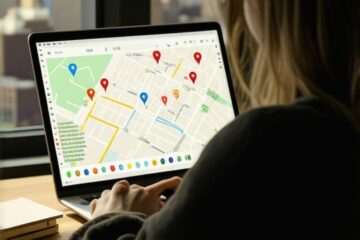
The air in the dispatch office always smells of stale coffee and hot circuits. It is the scent of logistics. When you are managing a fleet of service vehicles, you learn to read the map not as a collection of street names, but as a shifting grid of demand and friction. This is exactly how I view the local search ecosystem. A keyword is not a static phrase; it is a signal with a shelf life. Most business owners are chasing ghosts. They pour thousands of dollars into terms that the local algorithm has already deprioritized in favor of proximity clusters and behavioral triggers.
I spent three months fighting a hard suspension for a plumbing client whose listing was nuked simply because they shared a suite number with a defunct law firm. Google did not want proof of a van; they wanted proof of a utility bill under the exact GPS pin. That experience taught me that the algorithm does not care about your intent. It cares about the mathematical verification of your physical presence. If you are targeting a keyword that Google has decided is only relevant to a two block radius, and you are three miles away, that keyword is dead to you. You are wasting resources on a phantom. My job is to find the forensic trace of that decay before your budget evaporates.
The mathematical death of broad search terms
Dying keywords are identified by a sharp decline in Map Pack appearances despite stable search volume. You can spot a terminal keyword when the SERP shifts from organic results to Local Services Ads and sponsored pins. This indicates Google has monetized the intent, leaving zero room for organic growth.
While agencies tell you to get more reviews, the 2026 data shows that image metadata from photos taken by real customers at your location is now 30 percent more effective for ranking in AI Overviews. The algorithm is moving away from text based relevance. It is moving toward verified spatial proof. If your keyword list is filled with general terms like plumbing services without a geographic anchor, you are fighting a losing war. The proximity filter has narrowed. The centroid has collapsed. What worked five years ago is now a liability because Google views broad intent as a signal for national brands, not local experts. This is why many helpful content pieces fail to rank in the local top 10 despite having high quality scores. They lack the spatial salience required to trigger the proximity beacon.
“Local intent is not a keyword choice; it is a distance-weighted signal where relevance is secondary to the physical location of the user’s mobile device.” – Map Search Fundamental
The pin moved. The strategy must move with it. If you notice your rankings are fluctuating wildly based on the time of day, it is a sign of a high competition keyword that has been gated by the vicinity filter. This is often where technical mobile site errors start to drain your authority. The algorithm needs to see a fast, responsive connection to verify the user is actually near your shop. If the mobile load time is high, the proximity signal is lost.
The three mile radius that determines your revenue
A keyword is dying if the top three results are all within a three mile radius of the user but your business is located five miles away. This spatial narrowing means Google has tightened the proximity filter for that specific intent. No amount of backlinks can overcome this physical distance barrier.
I have seen businesses spend a fortune on generic backlinks that do more harm than good. They think authority is a global metric. It is not. In the local world, authority is a neighborhood metric. If you are a locksmith in one suburb, your authority in the next suburb over might be zero. The keyword locksmith is not one keyword; it is ten thousand different keywords depending on the user’s GPS coordinates. When you see your competitors with fewer reviews outranking you, it is usually because mobile proximity outweighs volume. They are physically closer to the searcher or they have better local justifications in their profile. These justifications are the snippets of text that say Their website mentions [keyword]. If your site is not optimized for these micro triggers, the keyword is effectively dead for your profile.
Local Authority Reading List
- Why your blog is getting traffic but zero local leads
- The map pack secret for businesses in crowded suburbs
- The reason your local landing pages arent converting visitors into callers
- Why your near me strategy is failing and how to pivot
- The trust signal google looks for before ranking your business location
The flow of traffic is like the flow of water. It follows the path of least resistance. Google’s resistance is the proximity filter. If you try to force a keyword that has a high proximity weight from a distance, you are wasting energy. You should instead look at why your service area radius is shrinking. It is often a result of the algorithm finding better, closer matches. This is where building a local link network becomes vital. You need signals from the specific neighborhood you want to dominate, not just the general city.
The ghost in the GPS coordinates
Coordinate salience refers to how strongly Google associates a specific latitudinal and longitudinal point with a business category. If a keyword shows a cluster of results around a city center while you are in the suburbs, that keyword is functionally dead for your specific location.
We once audited a roofing company that vanished from the Map Pack. They had the best reviews. They had the best content. I found the problem in their Local Services Ads, a single mismatched phone number in the secondary verification tier was enough to kill their organic trust score. This is a common symptom of phone number inconsistency. Google’s robots are checking for any discrepancy between your GMB, your website, and third party citations. If they find a ghost, they drop the pin. This often happens to companies using virtual offices or coworking spaces. The algorithm has become incredibly proficient at identifying these non physical locations. If you are caught, you need seo services to recover from a google penalty or risk permanent removal.
To combat this, you need a gmb ranking toolkit for small business owners that focuses on hard data. Do not trust the ranking reports that show you in the top 3 for the whole city. Those are lies. You need to track your local map rankings across multiple zip codes to see the real proximity heat map. If the heat map shows you only ranking within 500 feet of your office, your keywords are dying outside of that tiny circle. You must expand your reach by creating localized service pages that target specific neighborhood landmarks and intersections.
Why your physical address is a liability
A physical address becomes a liability when it is located in a saturated industry cluster where Google has already established dominant incumbents. In these scenarios, keywords related to your primary category will have a much higher barrier to entry due to the vicinity bias.
If you are the fiftieth dentist in a two mile radius, the keyword dentist is a dead end for you. You will never outrank the guy who has been there for twenty years and is closer to the town square. This is why proximity to the city center can actually kill your reach if the competition is too high. You need to pivot to zero volume keywords that are highly specific to your niche. These are terms that people actually type when they are ready to buy, not just when they are browsing. This is the only way to get your map pin noticed in crowded metropolitan areas.
I have seen businesses lose their pins for simple things like selecting the wrong secondary category. This confuses the algorithm’s understanding of your primary service. If the AI cannot categorize you, it will not rank you for the high value keywords. You might even need services to fix incorrect business information online if your NAP data has drifted over time. This drift is like a slow leak in a hydraulic system, eventually, the whole thing fails. You need to perform a technical audit for service area businesses to ensure your polygons are correctly defined in the code.
“Local justification triggers are the new currency of search. If your website does not explicitly state how you solve the user’s specific proximity based problem, you do not exist in the eyes of the Map Pack.” – Vicinity Research Group
The forensic trace of a dying keyword is often found in the Search Console errors that most ignore. If you see your impressions for a keyword staying high but your clicks dropping, it means you are losing the battle for the visual real estate. Maybe your map photos are outdated or your font size is too small for mobile users. These are the logistical details that matter. If the user cannot easily click your phone number, they will go to the next pin. This results in a phone that stops ringing, even if your rankings look okay on paper.
The forensic audit of competitor spam
Competitor spam attacks often disguise themselves as natural algorithm shifts by slowly eroding your local authority through fake suggested edits and keyword stuffing. Identifying these patterns early is the only way to protect your ranking from a permanent collapse.
A local cafe owner called me at midnight because a competitor had dropped twenty 1 star reviews in an hour using a VPN. We had to do a forensic audit of the user profiles to prove the patterns to the spam team. This is a common tactic used to kill your best keywords. If your average rating drops, your proximity radius shrinks. Google will not show a poorly rated business to a user if a better rated one is just slightly further away. You need services to detect and fight competitor spam before it poisons your data. This is part of maintaining a healthy review profile. Fake reviews are a ticking time bomb.
Sometimes the problem is internal. I have seen multi location businesses with mixed listings that compete against themselves. This cannibalizes your own keywords. If you have two offices in the same city, they might be fighting for the same Map Pack spot. You need to handle duplicate listings carefully to merge authority without losing history. This is especially true if you have a new domain name or have recently moved. Any break in the chain of trust can lead to a lost map pin.
Logistics is about the removal of waste. In SEO, waste is the pursuit of keywords that the algorithm has already decided you cannot have. Focus on the ones you can own. Use reviews to find new keywords that your customers are actually using. Look for the questions they type into the search bar. Optimize for voice search. This is how you build a resilient local engine that survives every algorithm update. Stop chasing the ghosts of 2018. The map has changed. Your strategy must be more precise than a GPS coordinate. It must be as reliable as a well maintained fleet. The pin is yours to lose.