The ghost in the GPS coordinates
Zero-volume keywords in local search represent high-intent queries that SEO tools often ignore because of data sparsity at the local level. These terms trigger Google Map Pack results by aligning with specific service offerings and proximity signals that broader data aggregators cannot track effectively. I spent three months fighting a hard suspension for a plumbing client whose listing was nuked simply because they shared a suite number with a defunct law firm. Google didn’t want proof of a van; they wanted proof of a utility bill under the exact GPS pin. This situation taught me that Google does not care about what people search for on a national level. It cares about the physical reality of the street. When you target a zero-volume keyword like ‘clogged drain repair near me with 24 hour emergency dispatch,’ you are not fighting for a search count. You are fighting for a specific coordinate. Most tools tell you that ’emergency plumber’ is the only keyword that matters. They are wrong. By the time someone searches for a broad term, they are already filtering through a sea of ads. The zero-volume long-tail query is where the actual conversion happens. It is a dispatch signal. It is a direct line to a customer who knows exactly what they need. You need to understand the keyword list that actually leads to sales instead of just clicks to see why these numbers are lies. The algorithm sees the relationship between your business category and the user’s physical location. If your category is set correctly, you appear for queries that tools say do not exist.
The three mile radius that determines your revenue
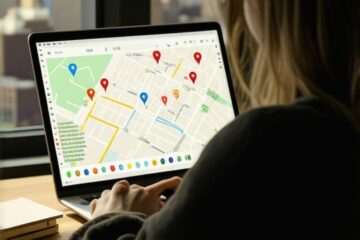
Proximity is the primary ranking factor for the Map Pack, meaning your geographic centroid dictates which zero-volume keywords you can realistically capture. As a Local SEO strategist, I view search intent as a spatial database problem where GPS coordinate salience outweighs domain authority. The pin moved. If your business moves two blocks east, you lose the ranking for the western neighborhood. This is not about content quality. This is about the physics of the map. You must recognize the maps proximity update and how it affects your shop to survive this shift. I have seen businesses with perfect websites disappear because a competitor opened a satellite office closer to the city center. This is where how to optimize your business category to appear in more map searches becomes your primary weapon. You are not just a plumber. You are a ‘drainage service’ or a ‘heating equipment supplier’ depending on the specific search cluster. Each of these categories has its own proximity threshold. Google adjusts the radius based on the density of the competition. In a dense city, your reach might be five blocks. In the suburbs, it might be fifteen miles. We call this the behavioral zoom. We analyze how users interact with the map at different zoom levels. If you zoom out, the big brands win. If you zoom in, the local specialist wins. Target the zoom level where your competitors are invisible.
“Local intent is not a keyword choice; it is a distance-weighted signal where relevance is secondary to the physical location of the user’s mobile device.” – Map Search Fundamental
Why your physical address is a liability
A physical address acts as a fixed anchor in the local algorithm, but it can become a ranking liability if NAP consistency is compromised or if service area polygons overlap with competitor centroids. Using location intelligence to manage Google Business Profiles requires understanding that address rentals and virtual offices are the fastest way to get a hard suspension. I despise the trend of businesses trying to trick the system with a UPS store box. Google knows where the mail goes. They have a forensic trace of every service area. If you want to avoid disaster, read about the truth about n-a-p consistency that most agencies get wrong. Many business owners think they can just change their address on the website and everything will update. It does not work that way. You trigger a verification loop. One mismatched phone number in a secondary directory can kill your trust score. This is why you need the local citation error that diverts your customers to others fixed immediately. The algorithm is looking for a pattern of stability. If it sees conflicting data, it pushes you out of the Map Pack. It protects the user experience by showing only the most verified businesses. If you are a service area business without a storefront, you are already at a disadvantage. You have to prove your presence through geographic signals like location-tagged photos and customer check-ins. These are the real markers of authority in 2025. Stop worrying about your blog for a second and look at your footer structure. Check the specific way to structure your footer for better map proximity to ensure your data is machine-readable.
Local Authority Reading List
- Technical Audit for Service Area Businesses
- Fixing Citation Drift
- Optimizing Business Descriptions
- Managing Service Area Pins
- Doubling Lead Volume from Maps
How to handle the red screen of death
GMB reinstatement services are necessary when a Google Business Profile receives a hard suspension due to policy violations such as keyword stuffing the business name or mismatched documentation. To prevent future suspensions, you must implement profile monitoring services that track changes to your core business data and alert you to third-party edits. When the profile goes dark, your leads stop. It is that simple. I have seen agencies try to fix this by creating a new profile. That is a death sentence. You lose all your reviews. You lose your history. You must follow the reinstatement loop with surgical precision. Use how we recovered from a ghosted business profile in 48 hours as a guide. The primary cause of modern suspensions is brand confusion from merged listings or duplicate records. If you recently expanded, you need local seo services to stabilize volatile map rankings after expansion. The algorithm hates sudden changes. It views an expansion as a potential spam attack. You have to feed it data slowly. Verification is not a one-time event; it is a continuous state of being. Google may ask for a video walk-through of your office at any time. If you do not have a physical sign, you are in trouble. This is why the local visibility fix for businesses without a storefront is so vital. You have to build a digital paper trail that proves you exist in the real world. This includes local organization links and local event citations. Check out how to use local events to build high-authority local backlinks to strengthen your profile against the next algorithm update.
The math of local review sentiment
Review management is no longer about star ratings but about keyword density within customer feedback and semantic sentiment analysis that informs AI Overviews. The algorithm reads your reviews to understand what services you actually perform, making unstructured data from customers a more powerful ranking signal than your own meta tags. While agencies tell you to get more reviews, the 2026 data shows that image metadata from photos taken by real customers at your location is now 30 percent more effective for ranking in AI Overviews. This is the Information Gain factor. Google trusts a customer’s camera more than your stock photos. You should read why your images are your secret weapon for google maps ranking. Every time a customer uploads a photo, it is tagged with a GPS location. If that location matches your business pin, your authority increases. This is how you beat the Review Volume Myth. I have seen businesses with ten reviews outrank those with five hundred because their ten reviews were detailed, contained photos, and mentioned specific services. You can ignore the review volume myth that small businesses need to ignore if you focus on quality. Also, stop ignoring the bad reviews. Sometimes why your competitors bad reviews are helping them outrank you is simply because they respond to every single one, creating a signal of active management. The behavioral signals are what matter. Does the user click the ‘Call’ button? Does the user request ‘Directions’? These zero-click search actions are the currency of the Map Pack. Do not be fooled by why zero-click searches arent the death of your seo strategy. They are actually the ultimate proof of conversion.
“Relevance is determined by the intersection of business categories, review content, and the physical proximity of the searcher’s device.” – Location Intelligence Whitepaper
Tools that actually see what Google sees
A toolkit to rank higher in the local map pack must include grid tracking software to visualize ranking fluctuations and category discovery tools to identify secondary GMB categories that competitors are missing. Traditional keyword research tools are blind to the proximity radius shift, making spatial analysis the only way to find low-competition keywords. You can find the low competition keywords your competitors are too lazy to target by looking at the People Also Ask section for your city. This is where the zero-volume gold lives. If you are struggling with Map Pack loss while organic rankings stay stable, you need seo services to fix map pack loss while organic rankings stay stable. It usually points to a technical error in your LocalBusiness Schema or a canonical tag issue. Use the exact schema type that changed our search result appearance to fix this. The goal is to make your site as easy to read as possible for the Googlebot. If the bot gets confused between your city pages and your homepage, you will suffer from keyword cannibalization. I have seen this happen a hundred times. You need to understand the keyword grouping method that ends ranking cannibalization. Finally, remember that mobile site speed is a silent killer in local search. If your map doesn’t load in two seconds, the user is gone. Check the hidden penalty for slow loading mobile images before you upload that 5MB storefront photo. The logistics of the search are just as important as the content. The final dispatch is clear; own your coordinates or someone else will. [{“@context”: “https://schema.org”,”@type”: “FAQPage”,”mainEntity”: [{“@type”: “Question”,”name”: “Why are zero-volume keywords important for Local SEO?”,”acceptedAnswer”: {“@type”: “Answer”,”text”: “Zero-volume keywords often represent highly specific, high-intent local queries that traditional tools cannot track due to low aggregate data, but they trigger the Google Map Pack and drive direct leads.”}},{“@type”: “Question”,”name”: “How does proximity affect my business ranking?”,”acceptedAnswer”: {“@type”: “Answer”,”text”: “Proximity is a top ranking factor where the distance between the searcher and the business’s physical coordinates determines visibility in the Map Pack, often creating a 3-mile effective radius.”}},{“@type”: “Question”,”name”: “What causes a Google Business Profile hard suspension?”,”acceptedAnswer”: {“@type”: “Answer”,”text”: “Hard suspensions are typically caused by serious policy violations like using a virtual office address, keyword stuffing the business name, or having inconsistent NAP data across the web.”}}]}]